Energy Process
Engineering Laboratory

With a focus on intelligent chemical process operation,

our research group explores the integration of advanced AI techniques.

By reimagining traditional paradigms in process design, control, and optimization,

we aim to unlock more autonomous, efficient, and insightful decision-making across the chemical industry.

Bridging domain knowledge and machine learning, we pursue a future

where data and physics-driven intelligence reshape how processes are understood and operated.

With a focus on intelligent chemical process operation, our research group explores the integration of advanced AI techniques.
By reimagining traditional paradigms in process design, control, and optimization, we aim to unlock more autonomous, efficient, and insightful decision-making across the chemical industry.
Bridging domain knowledge and machine learning, we pursue a future where data and physics-driven intelligence reshape how processes are understood and operated.

  • AI-Driven Acceleration in
    Chemical Process Design
  • Autonomous
    Process Control
  • Data-Enhanced Modeling
    of Complex Systems
  • Intelligent Process
    Monitoring and
    Data Analytics
  • Sustainability and
    Economic Assessment in
    Process Systems

Publication

View More
이미지가 없습니다.

Real-world implementation of offline reinforcement learning for process control in industrial dividing wall column

Joonsoo Park, Wonhyeok Choi, Dong Il Kim, Ha El Park, Jong Min Lee* Computers & Chemical Engineering │109383 │2026

Reinforcement Learning (RL) has emerged as a promising approach for automating industrial process control, particularly in handling stochastic disturbances and complex dynamics. However, conventional RL methods pose significant safety concerns in real-world applications due to their reliance on extensive real-time interactions with the environment. Offline RL, which derives an optimal policy solely from historical operational data, provides a safer alternative but remains underexplored in industrial chemical processes. In this study, we apply Calibrated Q-Learning (Cal-QL), an offline-to-online RL algorithm, to temperature control of an industrial dividing wall column (DWC). We propose a practical procedure for deploying offline RL in chemical plants, integrating a Long Short-Term Memory (LSTM) network with a Deep Q-Network (DQN) to effectively process time series data structure and discrete action distributions commonly encountered in plant operations. Extensive simulation studies and real-world experiments on an industrial DWC demonstrate the suitability of the proposed framework. We also highlight the critical role of reward function design in balancing short- and long-term objectives, significantly influencing control performance. Our best performing configuration achieved stable temperature control with a high automation ratio of 93.11%, underscoring the feasibility and practical effectiveness of offline RL for complex industrial plant operations.

이미지가 없습니다.

Steady-state modeling and simulation of the integrated isotope separation and water detritiation systems: Parametric studies and performance analysis

Gwanghyeon Kwon, Yeong Woo Son, Jae-Uk Lee, Min Ho Chang, Jae Jung Urm, Jong Min Lee* Fusion Engineering and Design │115513 │2026

In nuclear fusion fuel cycle, the isotope separation system (ISS) and water detritiation system (WDS) are critical for recycling hydrogen isotopologues but have rarely been analyzed in an integrated manner. To address this gap, we developed a steady-state simulation program that explicitly integrated ISS and WDS using an equation-oriented framework, incorporating rigorous thermodynamic, column design, and hydrodynamic models for cryogenic distillation (CD) columns and a liquid-phase catalytic exchange (LPCE) column. Extensive parametric studies on key variables such as feed flowrates, tank composition, and column feed stages were conducted to analyze their impacts on the separation performance of WDS and tritium inventory within ISS, highlighting the interdependent characteristics arising from the changes of the neighboring system. Furthermore, we identified the suitable design and operating variable sets, balancing high detritiation performance with low tritium inventory by systematically varying both the interfacial and non-interfacial variables. By offering a rigorous steady-state simulation that enables a comprehensive analysis of the integrated ISS–WDS process, the significance of this work lies in the simulator’s potential to analyze both processes from an integrated perspective. As a result, such findings can be utilized to define safe and efficient interface conditions during their integrated operations.

이미지가 없습니다.

Surrogate modeling of slot-die coating manifold for lithium-ion battery manufacturing using mode extraction methods

Sung Hyun Ju, Kyengmin Min, DongWoo Kim, Jaewook Nam*, Jong Min Lee* Chemical Engineering Science │122459 │2026

In lithium-ion battery manufacturing, slurry flow within slot-die coating manifolds is influenced by viscosity changes from microstructure deformations or grade variations. Since the slurry flow within slot-die manifold directly impacts coating quality, understanding its behavior under varying viscosity conditions is important. However, traditional CFD simulations for such analyses are costly and time-consuming, necessitating efficient and accurate surrogate models.This paper proposes a data-driven surrogate modeling method for the slot-die manifolds in lithium-ion battery applications, integrating mode extraction with machine learning and deep learning regression models. Proper orthogonal decomposition (POD) and kernel POD (KPOD) were applied to CFD data, with 4-fold incremental mode extraction tested for memory efficiency. Regression models were trained to predict feature coefficients of reduced bases from mode extraction. The optimal model, combining incremental POD and Gaussian process regression, achieved mean relative prediction errors of 0.03 %–0.05 % across velocity components and an average inference speed of 0.11 seconds per test sample. It also reduced peak memory usage from 120.64 GB to 53.47 GB. In contrast, KPOD-based model showed minimal memory gain (from 25.22 GB to 25.19 GB) and higher mean relative prediction errors (0.42 %–1.00 %), with similar inference speed to that of POD-based model. These results show that the proposed POD-based surrogate model is highly efficient and accurate for real-time control and optimization, in coating processes and other repetitive simulation tasks.

이미지가 없습니다.

Generative transformer-based deep hierarchical VAE model for the automated generation of chemical process topologies

Yeong Woo Son, Ji Hun Pak, Chan Kim, Jong Min Lee* Computers & Chemical Engineering │109431 │2026

Chemical process synthesis involves two key challenges: defining the process topology and specifying the physicochemical details. To address the first challenge, this work presents a data-driven framework for the automated generation of diverse and structurally valid process topologies. Our approach utilizes a transformer-based generative model to learn the underlying grammar of process structures from a large dataset of designs. By learning a flexible latent representation and enabling constraint-aware generation, our framework rapidly produces a wide range of novel candidate topologies for subsequent, engineering analysis. We compile a database of real-world process flow diagrams (PFDs) and augment it with synthetically generated process topologies using a higher-order Markov model. All flowsheets are encoded as structured text sequences using the simplified flowsheet input-line entry system (SFILES), allowing compatibility with transformer architectures. We train a generative model that integrates a modified transformer architecture with a deep hierarchical variational autoencoder (VAE), and apply a constrained beam search algorithm to ensure syntactic validity and design feasibility. Key contributions include: (1) a transformer-based generation method for latent vector-guided flexible process topology generation; (2) data augmentation using a higher-order Markov model; (3) a SFILES structural validator that checks the grammar and logic of process topologies; (4) a novel model architecture integrating a modified transformer decoder with a hierarchical VAE; and (5) a constrained beam search decoding strategy that enforces design requirements during sequence generation. Our results show that the proposed framework is capable of generating diverse, valid, and feasible topologies, offering a scalable approach to early-stage process development.

이미지가 없습니다.

Adaptive learning strategies for addressing chamber variations in real-time endpoint detection of semiconductor plasma etching

Chae Sun Kim, Hae Rang Roh, Yongseok Lee, Yongsin Park, Chanmin Lee, Jong Min Lee* Journal of Intelligent Manufacturing │2025

As wafer open areas decrease and circuit designs become more intricate, the demand for precise endpoint detection (EPD) in etching processes has increased. However, variations among plasma chambers induce covariate shifts in data distributions, degrading the generalization capability of machine learning-based EPD models. To address this issue, we propose a contrastive entropy-conditioned chamber adaptation framework that enables robust EPD in new (target) chambers exhibiting distribution shifts from existing (source) chambers, even without labeled data from the target chamber, by leveraging adversarial learning. Our approach incorporates two additional strategies to enhance adaptation effectiveness. First, we introduce entropy conditioning that assigns larger weights to data samples exhibiting high transferability between the source and target chambers. Second, we employ contrastive learning to prevent target chamber feature representations from being overly biased toward the source domain, thereby preserving the intrinsic characteristics of the target chamber. Experiments were conducted using real optical emission spectroscopy data collected from multiple chambers, and various adaptation scenarios were considered based on different source chamber selection criteria to evaluate the robustness of the proposed method. Our results demonstrate that the proposed adaptation framework consistently yields improved EPD performance across all scenarios. Furthermore, scenario analysis reveals that selecting a source chamber with a data distribution similar to the target chamber enhances adaptation performance. To facilitate effective adaptation in practical manufacturing settings, we further propose a source chamber selection algorithm based on the Wasserstein distance. Ablation studies confirm that each component of the proposed framework contributes significantly to adaptation performance improvement.

이미지가 없습니다.

Decoding industrial-scale battery manufacturing process through integration of causal graphs into explainable artificial intelligence

Haechang Kim, Ji Young Yun, Eunjoo Jung, Bora Lee, Hyeongseok Kim, Jong Min Lee* Engineering Applications of Artificial Intelligence │111657 │2025

Modeling and analyzing industrial-scale lithium-ion battery (LIB) manufacturing process present significant challenges due to the numerous variables and their complex interrelationships. While previous studies have utilized machine learning and explainable artificial intelligence to discern complex patterns and identify crucial variables from data, these methods often overlook the causal connections among input variables. This oversight can potentially lead to inaccurate interpretations and limited insights, particularly regarding how influences accumulate throughout the process. To address these limitations, this study introduces a comprehensive modeling and explanatory framework that incorporates causal information among input variables. By employing the Shapley flow algorithm, which propagates attributions along the edges of the causal graph, our framework successfully identified key process variables that could have not been isolated under conventional approaches. Furthermore, a detailed analysis of impact pathways for individual process parameters was also obtained by focusing on relevant edges. Through preliminary validation with a simulated system and subsequent application to real-world data from leading commercial LIB manufacturing enterprise, we confirmed the method’s efficacy in accurately pinpointing significant variables. Our analysis also introduced novel insights into the impact pathways of process parameters, previously unexplored by previous approaches. This new understanding offered engineers deeper insights and actionable strategies, boosting the potential for enhanced process analysis and decision-making capabilities.

Unsupervised incremental learning framework for online fault diagnosis

Suk Hoon Choi, Kyoungmin Lee, Jong Min Lee* Industrial & Engineering Chemistry Research │12087-12097 │2025

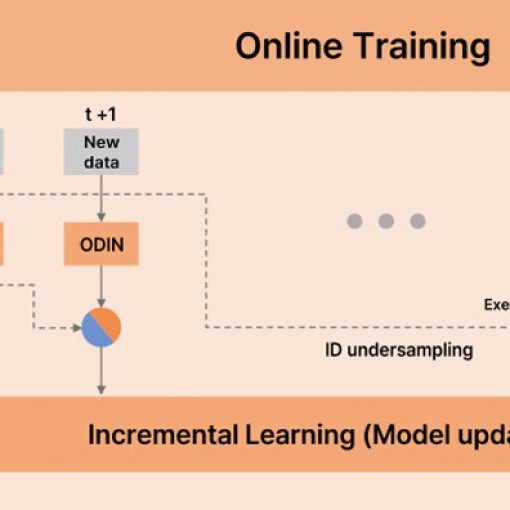
Online fault diagnosis is crucial for ensuring the safe and efficient operation of industrial processes, particularly in real-world scenarios where operation changes and new unlabeled anomaly data are continuously introduced. However, conventional batch learning and incremental learning (IL) methods rely on historical or labeled data, limiting their diagnostic performance in such dynamic conditions. To address this challenge, we propose a novel unsupervised IL framework that detects unseen faults and updates the model in real time. This approach combines out-of-distribution detection with an IL technique to handle unlabeled new data for online fault diagnosis. Out-of-distribution detection in neural networks detects new classes in the data and assigns labels accordingly. Subsequently, IL with knowledge distillation is used to continuously update the model, incorporating the newly labeled data. A transformer-based classifier, chosen for its high predictive performance and adaptability, serves as the pretrained model, facilitating real-time updates. The framework’s efficacy and accuracy in updating the model for real-world scenarios with unlabeled new data were validated using the Tennessee Eastman process and the CWRU bearing data set, demonstrating significant improvements.

이미지가 없습니다.

Multimodal learning with missing modality for chemical process system

Suk Hoon Choi, Jong Min Lee* Computers & Chemical Engineering │109196 │2025

Multimodal learning, which integrates data from diverse modalities such as images, text, and acoustic signals, has gained increasing importance for its ability to extract richer information from various sources. In chemical process systems, where complex phenomena such as reactions and heat flows involve data across multiple modalities, effectively leveraging this diverse information is crucial for accurate system interpretation and decision-making. Despite its potential, existing multimodal approaches have largely been developed for vision and natural language processing domains, with limited attention to the unique challenges in chemical processes, particularly the common issue of missing modalities in real-world data. To address this, we propose a novel Multimodal learning framework with Missing modality for Chemical processes (MMC). Our framework handles image and tabular data using patch projection and LSTM layers for embedding, while a multimodal transformer identifies interactions across modalities. We incorporate prompt learning to mitigate the missing modality problem by fine-tuning the model with missing-aware prompts. Through extensive experiments on a plug flow reactor system for fault diagnosis, we demonstrate the robustness and improved performance of MMC, especially in scenarios with missing data. An ablation study further investigates the effectiveness of the model architecture and prompt design.

이미지가 없습니다.

Computationally efficient model predictive control for hybrid electric vehicle using driving pattern recognition network

Hyun Min Park, Se-Kyu Oh, Jinsung Kim, Jong Min Lee* International Journal of Control, Automation, and Systems │1851-1859 │2025

With intensifying concerns over emissions, hybrid electric vehicles (HEVs) offer a practical bridge toward electrification by combining an internal combustion engine and an electric battery for improved efficiency and lower emissions. This study proposes a driving pattern recognition network-hybrid model predictive control (DPRN-HMPC) framework to improve the energy management of parallel hybrid electric vehicles (PHEVs) while reducing computational complexity. DPRN-HMPC leverages a pre-trained deep neural network classifier to identify the driver’s current driving pattern, which is then used to predict the wheel torque demand input for the model predictive control (MPC). This approach effectively predicts wheel torque demand—a stochastic variable—without relying on a computationally expensive stochastic model. Simulation results demonstrate that DPRN-HMPC improves average energy efficiency by 1.08% over linear deterministic MPC (LDMPC) across ten driving cycles. It maintains performance comparable to scenario-based hybrid MPC (scHMPC) while reducing computation time by 77.3%, ensuring feasibility within the 1,180-second limit of the New European Driving Cycle. Additionally, DPRN-HMPC achieves a 0.75% improvement in energy efficiency across five unseen driving cycles, demonstrating adaptability to new driving scenarios. These findings highlight the effectiveness of DPRN-HMPC in providing both practical and energy-efficient control solutions for PHEV energy management.

이미지가 없습니다.

ChemDT: A stochastic decision transformer for chemical process control

Junseop Shin, Joonsoo Park, Jaehyun Shim, Jong Min Lee* Computers & Chemical Engineering │109155 │2025

The rapid advancement of industries has complicated process modeling, as conventional model-based control methods struggle with models that inadequately capture system complexities and impose significant computational burdens on their use. Reinforcement learning (RL), which leverages practical operational data instead of explicit models, often adapts better to these complexities. However, RL’s need for extensive online exploration poses potential risks in sensitive environments like chemical processes. To address this, we propose an offline RL approach based on the Decision Transformer (DT) architecture, named ChemDT. ChemDT incorporates stochastic policies with maximum entropy regularization, broadening policy coverage under limited offline data. To mitigate DT’s vulnerability to stochastic environments, we introduce a monitoring variable, λ, enabling selective responses to significant stochastic events amidst pervasive disturbances. Validated on a Continuous Stirred Tank Reactor (CSTR) and an industrial-scale fed-batch reactor, our approach demonstrates superior control performance compared to other offline RL algorithms.

이미지가 없습니다.

Techno-economic assessment and feature importance analysis of gas hydrate-based carbon capture processes

Hyun Min Park, Jong Min Lee*, Tae Hoon Oh* Energy │136260 │2025

Among emerging CO2 capture approaches, hydrate-based carbon capture (HBCC) has shown particular promise for pre-combustion applications, given its eco-friendly, water-based solvent. This study conducted a comprehensive techno-economic assessment of various HBCC configurations and introduced a novel process design that transports CO2 as a hydrate. Compared to a state-of-the-art absorption process, the proposed HBCC design reduced the levelized cost of CO2 captured (LCOC) by 6.8%. Sensitivity analyses covering plant capacity confirmed that this configuration was especially cost-effective at lower feed flowrates. Further feature-importance analysis using SHapley Additive exPlanations (SHAP) revealed that removing the dissociation stage and decreasing the water-to-gas ratio were critical for minimizing LCOC. These results indicate that an optimized HBCC outperforms conventional methods in cost and efficiency while offering a straightforward path to improved economic and environmental viability.

이미지가 없습니다.

A diffusion-attention-based algorithm for optimal spatio-temporal sensor placement in distributed parameter systems

Yeong Woo Son, Jong Min Lee* Computers & Chemical Engineering │109163 │2025

Sensor placement design (SPD) for distributed parameter systems (DPSs) remains challenging due to the vast number of potential sensor locations and the associated deployment costs. Traditional SPD methods, such as those based on observability and Kalman filters, are limited by assumptions of linearity and low sensor counts, which can be impractical in complex industrial environments. In this work, we propose a diffusion-attention-based approach that is fully data-driven, eliminating the need for explicit numerical models of the system. Our approach integrates a diffusion model—capable of progressively denoising corrupted data—and an attention mechanism that identifies the most informative sensor locations. By prioritizing sensors with higher attention weights, we ensure accurate reconstruction of the unobserved states despite using relatively few measurement points. We validate the proposed method on two benchmark DPSs, the catalytic rod and the Brusselator. Results demonstrate that our algorithm achieves sufficient accuracy in both state reconstruction and fault detection. Furthermore, the approach scales naturally to scenarios where certain states can be easily measured, thus enhancing performance.

Modeling and optimization of PET hydrogenolysis in a slurry bubble column reactor

Jae Hwan Choi, Chan Kim, Jong Min Lee* Industrial & Engineering Chemistry Research │9303-9314 │2025

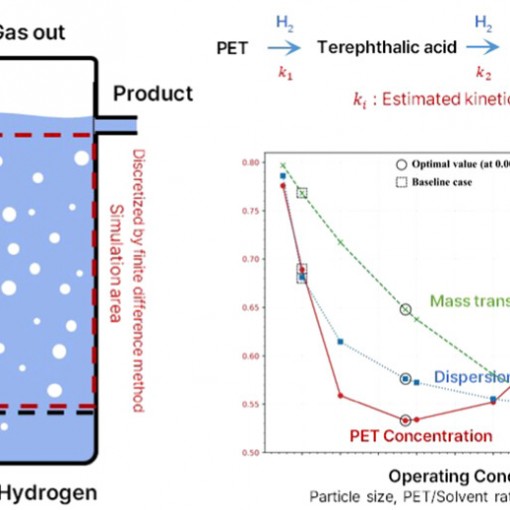
As interest in polyethylene terephthalate (PET) recycling grows, research into PET hydrogenolysis has expanded, yet reactor design studies remain limited. This work presents a mathematical model for a three-phase slurry bubble column reactor, chosen for its suitability in high-pressure and viscous conditions. Using hydrodynamic correlations and a GPU-based optimization solver, the model simulates and optimizes reactor performance. Results reveal that viscosity, influenced by polymer molecular weight and solvent ratio, critically impacts PET conversion rates. Catalyst size and feed proportion also significantly affect conversion via changes in axial dispersion, mass transfer, and reaction kinetics. These findings underscore the importance of optimizing viscosity and other reactor parameters to improve the efficiency of PET hydrogenolysis, supporting more effective industrial recycling strategies.

이미지가 없습니다.

Dimensionality reduction for clustering of nonlinear industrial data: A tutorial

Hae Rang Roh, Chae Sun Kim, Yongseok Lee, Jong Min Lee* Korean Journal of Chemical Engineering │987-1001 │2025

Dimensionality reduction is essential for industrial process data with numerous nonlinear variables to retain only the important features for visualization or subsequent tasks. This study serves as a tutorial demonstrating how various dimensionality reduction techniques perform as the complexity of process variables in toy examples increases. Among the variables, there are those containing fault signals, aiming to demonstrate the process of performing a fault detection task. The results evaluated based on three criteria showed that Uniform Manifold Approximation and Projection (UMAP) demonstrated notable results, particularly with sparse and noisy data, while also offering adequate robustness to out-of-sample test data. This tutorial provides guidance on selecting the appropriate dimensionality reduction technique based on data complexity, ultimately enabling more effective execution of subsequent tasks.

이미지가 없습니다.

Optimal design of BOG reliquefaction systems for LNG carriers: A focus on GMS performance during loaded voyages

Hyunjun Shin, Dongchan Kim, Wonjae Choi, Jong Min Lee* Korean Journal of Chemical Engineering │901-921 │2025

This study proposes a strategy for evaluating efficient design of the Gas Management System (GMS) on LNG carriers by decomposing its performance to subsystems: the reliquefaction system (RS) and the fuel gas supply system (FS). With increasingly stringent maritime regulations on greenhouse gas emissions, the need for efficient LNG carrier operations has become critical. A major factor in reducing fuel consumptions and carbon emissions is optimizing the design of the RS, given its significant power demand for processing NBOG. However, effective GMS design must account for variations in RS operation performance, as well as the contributions of the FS in treating NBOG with changes in ship speed. This study compares GSM configurations with reliquefaction systems based on two representative refrigeration cycles: the nitrogen reverse Brayton cycle (NRBC) and the single mixed refrigerant cycle (SMRC), both analyzing effects of cold BOG utilization. Results indicate that the RS of GMS4A-aSMRC [the aSMRC is the refrigeration cycle which utilizes cold BOG within the Single Mixed Refrigerant Cycle (SMRC)] demonstrates superior RS design performance. However, the most efficient GMS configuration varies with the Boil-off Rate (BOR): GMS2-aNRBC [the aNRBC is the refrigeration cycle which utilizes cold BOG within the Nitrogen Reverse Brayton Cycle (NRBC)] is optimal aligning with its RS performance for a 0.11%/day BOR, while GMS3-SMRC without cold BOG in RS is the most efficient for a 0.075%/day BOR, owing to increased contributions from the FS. In this study, a performance index with a consistently comparable baseline is derived to accommodate compositional deviations from flash gas recirculation at NBOG disposal streams, enabling the GMS performance to be correlated with compatible values of its decomposed subsystem.

이미지가 없습니다.

Optimization of operational strategies for industrial applications of solar-based green hydrogen

Youngseok Bak, Hyuncheol Ryu, Gobong Choi, Dongwoo Lee, Jong Min Lee* Applied Energy │124693 │2025

Renewable-based green hydrogen is emerging as a viable solution for decarbonizing energy-intensive industries. However, the fluctuating and intermittent nature of renewable energy sources requires careful consideration of operational strategies to ensure the safe and economical use of green hydrogen in industrial applications. This study examines the influence of operational strategies for electrolyzers and downstream processes on the cost of solar-based green hydrogen. The results demonstrate that optimal operational strategies for electrolyzers significantly impact the sizes of batteries and electrolyzers, reducing the Levelized Cost of Hydrogen (LCOH) by an average of 5.3%. Case studies further demonstrate that decentralized end-user supply strategies and cooperation with downstream processes can reduce LCOH by up to 39.8% for fully distributed end-users and by 24.2% with the introduction of supply tolerance. Additionally, the study evaluates the impact of grid backup, revealing that grid utilization can reduce LCOH by 12.9% in Houston, underscoring the potential for further cost reductions through grid decarbonization. These findings highlight the importance of optimizing operational strategies to improve the economic performance and market viability of green hydrogen systems.

이미지가 없습니다.

Reinforcement learning for process control: Review and benchmark problems

Joonsoo Park, Hyein Jung, Jong Woo Kim*, Jong Min Lee* International Journal of Control, Automation, and Systems │1-40 │2025

The success of reinforcement learning (RL) combined with deep neural networks has led to the development of numerous RL algorithms that have demonstrated remarkable performance across various domains. However, despite its potential in process control, relatively limited research has explored RL in this field. This paper aims to bridge the gap between RL and process control, providing potential applications and insights for process control engineers. In this review, we first summarize previous efforts to apply RL to process control. Next, we provide an overview of RL concepts and categorize recent RL algorithms, analyzing the strengths and weaknesses of each category. We implement fourteen RL algorithms and apply them to six relevant benchmark environments, conducting quantitative analyses to identify the most suitable approaches for specific process control problems. Finally, we draw conclusions and outline future research directions to advance RL’s application in process control.

이미지가 없습니다.

Two-stage dynamic real-time optimization framework using parameter-dependent differential dynamic programming

Hyein Jung, Jong Woo Kim*, Jong Min Lee* Computers & Chemical Engineering │108896 │2025

The purpose of chemical process control includes proactive adjustment of the operation to make the most profit out of it. Within this context, real-time optimization (RTO) is proposed and extended to dynamic RTO (DRTO) in the hierarchical control structure, usually having model predictive control (MPC) below. However, online tractability confined the model complexity of RTO and MPC, which results in model inconsistency and, even, incompatible solutions. Here we use parameter-dependent differential dynamic programming (PDDP) to incorporate the closed-loop behavior of the controller in an RTO layer to reduce problem complexity and online computation time. The adaptive control performance of PDDP and the efficacy of closed-loop DRTO formulation with PDDP is demonstrated with the reaction–storage–separation network system control. Consequently, PDDP provides a useful parameterization method to express closed-loop system dynamics, which enables fast feedback control and integrated plant optimization.

이미지가 없습니다.

Modeling, parameter estimation and optimization of fluidized bed-based alternative ironmaking process for CO2 emission reduction

Jae Hwan Choi, Shikyung Yoon, Sunyoung Kim, Myung Kyun Shin, Jong Min Lee* Journal of Industrial and Engineering Chemistry │592-604 │2025

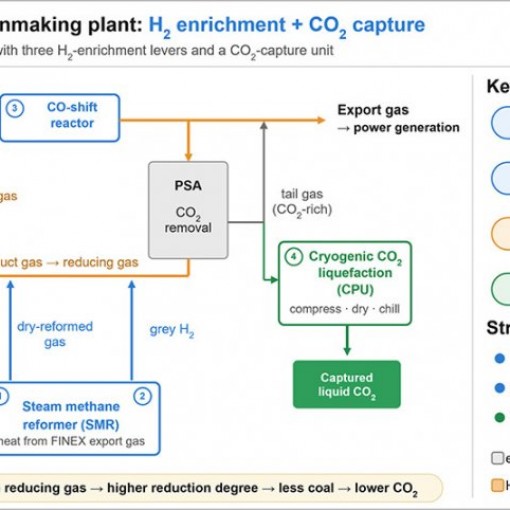
This study presents the development of a comprehensive process model for simulating and optimizing the FINEX process consists of the multi-stage fluidized beds, the melter-gasifier unit, and a gas recycling system. The model is developed using Pyomo, a Python-based open-source software package that provides extensive capabilities for formulating, solving, and analyzing optimization models. It incorporates heat and mass balance equations and captures a wide range of chemical reactions, including the reduction of iron ore by hydrogen and carbon monoxide, the calcination of carbonate materials, the water–gas shift reaction, and coal gasification and combustion. Unknown parameters in the model, such as heat loss in each reactor, the extent of the calcination reaction, and the outlet gas temperature from the melter-gasifier, were estimated to calibrate the model. These parameters were estimated by solving an optimization problem that minimizes the gap between the model and real plant data. The optimized model was employed to investigate various scenarios for minimizing CO2 emissions in the FINEX process. This included assessing the impact of HBI charging rates, iron ore quality, and the integration of a CCUS unit. For each scenario, an optimization problem was formulated to minimize production costs across a range of CO2 tax levels. The optimal solutions revealed the relationships between process economics and CO2 emissions for each variable.

이미지가 없습니다.

Self-explanatory fault diagnosis framework for industrial processes using graph attention

Chae Sun Kim, Han Bit Kim, Jong Min Lee* IEEE Transactions on Industrial Informatics │3396-3405 │2025

Explanations of deep learning fault diagnosis models have been crucial for risk management and subsequent maintenance actions. Furthermore, purely data-driven approaches for fault diagnosis in industrial processes, without integrating process knowledge or guidance, are limited in generalization ability. This article proposes a graph-based self-explanatory fault diagnosis model. The model employs a graph attention mechanism on a constructed graph data representation of the industrial process, facilitating to capture the causal relationships between process variables. Once the model is fully trained, variations in attention coefficients from normal operating condition are used to identify the root cause of the faulty scenario. This self-explanatory methodology elucidates the model's actual reasoning, obviating the need for additional separate explainable AI methods. Validations through benchmark processes demonstrate significant improvement in fault classification accuracy. Furthermore, variations in attention coefficients effectively identified precise origins of various fault types, including faults that had not been encountered during model training phase.

이미지가 없습니다.

Bayesian-optimization-based design of highly active and stable Fe-Cu/SSZ-13 catalysts for the selective catalytic reduction of NOx with NH3

Sanha Lim, Hwangho Lee, Hyun Sub Kim, Jun Seop Shin, Jong Min Lee*, Do Heui Kim* Reaction Chemistry & Engineering │3029-3037 │2024

Catalysts for the selective catalytic reduction of nitrogen oxides (NOx) with NH3 are currently limited by low activity at low temperatures and deactivation under hydrothermal conditions. Herein, we developed a highly active and hydrothermally stable zeolite-based catalyst, Fe–Cu/SSZ-13, using Bayesian optimization (BO). An initial surrogate BO model was constructed and used to identify the optimal Cu and Fe composition through iterative experiments. At each step, the next candidate which optimized the objective function and maximized the acquisition function was selected. The optimized catalyst comprised 2.0 wt% Cu and 2.0 wt% Fe in SSZ-13 zeolite, which was prepared by an incipient wetness impregnation. This catalyst achieved 95.8% NOx conversion at 250 °C and excellent hydrothermal stability, which outperformed the commercial catalyst. Structural characterization demonstrated that its excellent hydrothermal stability resulted from the effect of optimized loading of Fe co-cation. This study highlights the effectiveness of employing BO to design multicomponent catalysts.

이미지가 없습니다.

Plasma etching endpoint detection in the presence of chamber variations through nonlinear manifold learning and density-based clustering

Chae Sun Kim, Hae Rang Roh, Yongseok Lee, Taekyoon Park, Chanmin Lee, Jong Min Lee* IEEE Transactions on Semiconductor Manufacturing │553-566 │2024

The consistent decrease in the open ratio of wafers has spurred a demand for advanced endpoint detection (EPD) techniques to ensure accurate plasma etching in nonlinear optical emission spectroscopy (OES) data characterized by a low signal-to-noise ratio. Additionally, precise detection of endpoint is hindered by variations between plasma chambers arising from diverse issues. To address these issues, this study proposes a nonlinear manifold learning-based EPD model and a chamber condition identification framework. The EPD model demonstrates the capability to extract endpoint-related latent variables from complex nonlinear OES data. Moreover, the model exhibits the ability to generalize to larger datasets through density-based time series clustering. The chamber condition identification framework not only classifies plasma conditions but also automates the determination of the conditions for incoming new wafers. Evaluation of the proposed approach, conducted using actual OES data from multiple chambers, demonstrated that the EPD model outperformed other models which are based on diverse dimensionality reduction approaches. Furthermore, the chamber condition identification process successfully identified condition variations and accurately determined the plasma condition of new data. Moreover, conducting EPD modeling for separate conditions rather than collectively for diverse conditions demonstrated superior detection results, underscoring the importance of the chamber condition identification process.

LSTM-based hybrid model and refractive index fault detection for terpolymerization in CSTR

Kyoungmin Lee, Suk Hoon Choi, Ji Hun Pak, Jeonghwan Lee, Jong Min Lee* Industrial & Engineering Chemistry Research │14700-14711 │2024

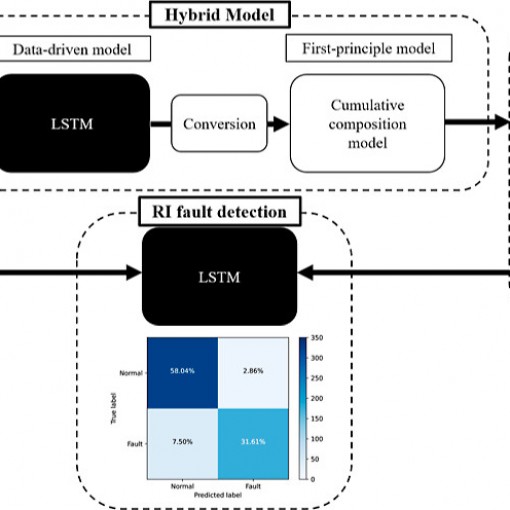
We propose a hybrid model based on long short-term memory (LSTM) and refractive index (RI) fault detection for the industrial terpolymerization process. This LSTM-based hybrid model integrates a first-principles model with LSTM to predict both the composition of the terpolymer and the concentration of monomers. Within this hybrid framework, the LSTM predicts the conversion using process variables, while the terpolymer composition is calculated using the first-principles model and the predicted conversion. The error for monomer composition prediction of the proposed hybrid model was reduced by 20% compared to the data-only model when the composition change exists. In addition, the RI fault detection is conducted using the augmented data by the hybrid model, and the F1 score increased by 5% compared to the model predicted using process variables alone.

이미지가 없습니다.

Data-driven analysis of temporal evolution of battery slurry in pipe systems

Junseop Shin, Hyejung Oh, Hyunjoon Jung, Nayeon Park, Jaewook Nam*, Jong Min Lee* Journal of Power Sources │234834 │2024

Lithium-ion batteries (LIBs) are considered one of the primary energy storage systems, with their electrodes playing a crucial role in battery performance. This study analyzes temporal evolution of battery anode slurry during transportation, which can result in the manufacturing of defective products, and presents an in-situ change detection methodology. From a laboratory-scale pipe system, pressure and flowrate signals are recorded during five-day transportation experiments. Considering the system’s periodicity, the Short-Time Fourier Transform (STFT) is adopted to utilize both time and frequency information. Using STFT-processed data, we train a Convolutional Neural Network (CNN) classifier and successfully detect temporal variations in the transportation signals. Furthermore, through Gradient Class Activation Map (Grad-CAM) technique, distinguishing patterns for each classified data are verified. Concurrently, the slurry’s rheological properties measured through daily sampling consistently exhibit gradual changes during transportation. Although we apply an arbitrary daily label as criteria of variations, hypothesizing that slurry’s microstructure and subsequently rheological properties and measurement signals change over time during transportation, an accurate detection is achieved, even if there are nearly imperceptible differences in the signal data to the naked eye. This study proposes a promising methodology capable of capturing the microstructure and rheological evolution of slurries without any rheological measurements.

이미지가 없습니다.

Machine learning for industrial sensing and control: A survey and practical perspective

Nathan P. Lawrence, Seshu Kumar Damarla, Jong Woo Kim, Aditya Tulsyan, Faraz Amjad, Kai Wang, Benoit Chachuat, Jong Min Lee, Biao Huang, R. Bhushan Gopaluni* Control Engineering Practice │105841 │2024

With the rise of deep learning, there has been renewed interest within the process industries to utilize data on large-scale nonlinear sensing and control problems. We identify key statistical and machine learning techniques that have seen practical success in the process industries. To do so, we start with hybrid modeling to provide a methodological framework underlying core application areas: soft sensing, process optimization, and control. Soft sensing contains a wealth of industrial applications of statistical and machine learning methods. We quantitatively identify research trends, allowing insight into the most successful techniques in practice. We consider two distinct flavors for data-driven optimization and control: hybrid modeling in conjunction with mathematical programming techniques and reinforcement learning. Throughout these application areas, we discuss their respective industrial requirements and challenges. A common challenge is the interpretability and efficiency of purely data-driven methods. This suggests a need to carefully balance deep learning techniques with domain knowledge. As a result, we highlight ways prior knowledge may be integrated into industrial machine learning applications. The treatment of methods, problems, and applications presented here is poised to inform and inspire practitioners and researchers to develop impactful data-driven sensing, optimization, and control solutions in the process industries.

이미지가 없습니다.

Experimental investigation of lab-scale fluidized bed for fine iron ore drying application under constant bed temperature condition

Shikyung Yoon, Changkuk Ko, Myung Kyun Shin, Jong Min Lee* Advanced Powder Technology │104443 │2024

This research paper investigates the drying characteristics of iron ore, specifically exploring the implementation of a fluidized bed-type iron ore dryer for the continuous operation of the FINEX process. To conduct this study, a laboratory-scale fluidized bed dryer was meticulously designed, equipped with real-time weight measurement capabilities for the inventory, which can be directly converted into the loss of moisture. The analysis aims to understand the influence of key operating parameters, including superficial gas velocity, fluidized bed temperature, and the initial moisture content of iron ore. The study is carried out under controlled bed temperature conditions, simulating the continuous operation of the industrial process. Additionally, various data smoothing techniques are applied to refine the analysis of drying characteristics, especially in evaluating the drying rate derived from differentiating the time-moisture content curve, commonly known as the drying curve. As a concluding aspect, a surrogate model is developed in terms of operating parameters to provide a deeper understanding of the drying behavior of iron ore, offering valuable insights for practical applications in related industries.

이미지가 없습니다.

Optimization of Fischer-Tropsch microchannel reactor using computational fluid dynamics and enveloped Bayesian optimization

Kyoungmin Lee, Jong Min Lee* Computers & Chemical Engineering │108658 │2024

We propose computational fluid dynamics (CFD)-enveloped Bayesian optimization (EBO), a novel optimizer that integrates EBO with CFD to reduce the required CFD simulations by utilizing previous optimization data. The proposed optimizer was applied to determine the optimal catalyst packing ratio of the Fischer–Tropsch microchannel reactor that minimizes the maximum temperature and maximizes the productivity of long-chain hydrocarbons by utilizing the CFD model. The obtained results indicate that the number of iterations required to reach the optimal points is lower than that of BO, and the optimal result exhibits a 5% improvement from the initial condition. The optimizer was evaluated across various catalyst packing cases to assess its robustness. Nevertheless, the proposed optimizer was consistently able to reach optimal points that BO could not achieve. We anticipate that this optimizer can be widely applied to optimize the operating condition of a chemical reactor in the presence of previous optimization data.

Accelerated structural optimization for the supported metal system based on hybrid approach combining Bayesian optimization with local search

Shinyoung Bae, Dongjae Shin, Haechang Kim, Jeong Woo Han*, Jong Min Lee* Journal of Chemical Theory and Computation │2284-2296 │2024

Numerous systematic methods have been developed to search for the global minimum of the potential energy surface, which corresponds to the optimal atomic structure. However, the majority of them still demand a substantial computing load due to the relaxation process that is embedded as an inner step inside the algorithm. Here, we propose a hybrid approach that combines Bayesian optimization (BO) and a local search that circumvents the relaxation step and efficiently finds the optimum structure, particularly in supported metal systems. The hybridization strategy combining the capabilities of BO’s effective exploration and the local search’s fast convergence expedites structural search. In addition, the formulation of physical constraints regarding the materials system and the feature of screening structure similarity enhance the computational efficiency of the proposed method. The proposed algorithm is demonstrated in two supported metal systems, showing the potential of the proposed method in the field of structural optimization.

이미지가 없습니다.

Liquid phase catalytic exchange column of water detritiation system: Steady-state modeling, simulation, and optimization

Yeong Woo Son, Jae Jung Urm, Gwanghyeon Kwon, Jae-Uk Lee, Min Ho Chang, Jong Min Lee* Fusion Engineering and Design │114222 │2024

This paper presents a steady-state modeling, simulations, and optimization for an LPCE column of water detritiation system. It introduces a three-fluid model that integrates isotopic exchange, equilibrium-stage, and hydrodynamic models, considering energy balance and multiple feeds with adaptable feed location. The models were implemented in Pyomo, an equation-oriented, Python-based optimization modeling framework. Parametric studies are presented to analyze the effects on the detritiation factor and deuterium concentration resulting from changes in the gas to liquid feed mole ratio, gas feed composition, heat duty distribution, and gas feed location. Using the three most commonly employed catalysts, a design study investigates the minimal number of hypothetical stages required to meet the defined annual tritium discharge levels.

이미지가 없습니다.

Techno-economic analysis and process optimization of a PET chemical recycling process based on Bayesian optimization

Jae Jung Urm, Jae Hwan Choi, Chan Kim, Jong Min Lee* Computers & Chemical Engineering │108451 │2023

Chemical recycling has gained interest as a promising option to reduce the consumption of fossil feedstocks and relieve environmental issues concerning plastic waste. In this study, we present a preliminary techno-economic analysis of a process design for chemical recycling of polyethylene terephthalate (PET). A conceptual base case design was developed for a continuous catalytic PET depolymerization process. The process design was optimized to minimize total annualized cost (TAC) based on a simulation-based Bayesian optimization approach. A novel interface was utilized to manipulate the process variables, and to retrieve simulation and economic evaluation results. Through five trials of optimization, the process design was improved by about 4.2∼4.4 % in terms of TAC. Sensitivity analyses investigating the effect of process parameters and price variables on the minimum selling price of main product, p-xylene, are presented. The feedstock PET flake price was identified as the most critical factor affecting the economic viability of the process.

이미지가 없습니다.

Integrating path integral control with backstepping control to regulate stochastic system

Shinyoung Bae, Tae Hoon Oh, Jong Woo Kim, Yeonsoo Kim*, Jong Min Lee* International Journal of Control, Automation, and Systems │2124-2138 │2023

Path integral control integrated with backstepping control is proposed to address the practical regulation problem, wherein the system dynamics are represented as stochastic differential equations. Path integral control requires the sampling of uncontrolled trajectories to calculate the optimal control input. However, the probability of generating a low-cost trajectory from uncontrolled dynamics is low. This implies that the path integral control requires an excessive number of trajectory samples to approximate the optimal control input appropriately. Therefore, we propose an integrated method of backstepping and path integral control to provide a systematic approach for sampling stabilized trajectories that are close to the optimal one. This proposed method requires a relatively small number of samples than that of the path integral control and uses the terminal set to further reduce the computational load. In simulation studies, the proposed method is applied to a single-input single-output example and a continuous stirred-tank reactor for demonstration. The results show the advantages of integrating the backstepping control and the path integral control.

이미지가 없습니다.

Improvement of plasma etching endpoint detection with data-driven wavelength selection and Gaussian mixture model

Chae Sun Kim, Hye Ji Lee, Hae Rang Roh, Taekyoon Park, Yongseok Lee, Jewoo Han, Sungun Kwon, Chanmin Lee, Jongwoo Sun, Kukhan Yoon, Jong Min Lee* IEEE Transactions on Semiconductor Manufacturing │389-39 │2023

The signal-to-noise ratio of optical emission spectroscopy (OES) data has decreased as the plasma etching process has advanced. As a result, not only the advanced endpoint detection method was required, but also the selection of more informative wavelengths. This paper proposes an improved endpoint detection algorithm by combining data-driven wavelength selection and a Gaussian mixture model (GMM). The data-driven wavelength selection algorithm finds the correlation between training data and a sigmoid function of time. Then, using the fitted GMM of the training data in latent space, the endpoint of the test data is determined in real-time. The proposed algorithm’s performance was evaluated using real OES data, comprised of seven operations. The correlation-based wavelength selection algorithm significantly reduced detection error by 70.2% when compared to the conventional method, which selects a few wavelengths manually based on prior knowledge. Additionally, the GMM detection method clustered OES data from low open area wafers much more clearly than the recently proposed method using GMM. This demonstrates that combining correlation-based wavelength selection with GMM is an effective method for detecting endpoints during plasma etching of small open area wafers.

이미지가 없습니다.

Soft sensor development based on just-in-time learning and dynamic time warping for multi-grade processes

Min Jun Song, Sung Hyun Ju, Jong Min Lee* Korean Journal of Chemical Engineering │1023-1036 │2023

This study presents the development of soft sensors based on just-in-time learning (JITL) and dynamic time warping (DTW) for online quality prediction in multi-grade processes. Most industrial chemical processes are multi-grade processes that produce multiple products with distinct properties. Multi-grade processes, however, are difficult to monitor and control due to frequent process transitions and abrupt changes in operating conditions. The DTW-based JITL soft sensor modeling approach is proposed as a solution to the complexity of multi-grade process modeling. In the JITL modeling approach, a local model is trained online using historical samples that are similar to the query sample, allowing the model to account for multi-grade characteristics and process drifts. To account for process dynamics and temporal correlations, the suggested approach utilizes a data sequence as an input rather than a single data point. DTW calculates the similarity of data sequences by stretching the sequences to determine an optimal warping path. Additionally, sensitivity analyses of model hyperparameters are performed and a cross-correlation-based hyperparameter optimization approach is proposed. The advantages of the proposed approach are verified via multi-grade simulation studies. As a result, the proposed model outperforms a conventional JITL model based on the Euclidean distance.

이미지가 없습니다.

Development of a physics-based surrogate model using two-dimensional first principle equations and optimization of open rack vaporizer

Suk Hoon Choi, Dong Hwi Jeong*, Jong Min Lee* Applied Thermal Engineering │120262 │2023

In an effort to provide stable and affordable city gas, the open rack vaporizer (ORV), a heat exchanger that vaporizes Liquefied Natural Gas (LNG) using seawater, is receiving significant attention. In this study, a physics-based surrogate model for the ORV system with high fidelity and low computational load compared to a computational fluid dynamics (CFD) model is developed based on two-dimensional (2D) first principle equations of energy and mass balances for heat transfer. Partial key parameters are estimated using the mean squared error based parameter subset selection method with global sensitivity analysis to address the overfitting issue. The resulting physics-based surrogate model shows robust performance and approximates the temperature profile with an error of less than 5% compared to the CFD data. Using the surrogate model, operating conditions are optimized with both multi-objective and single-objective functions. The results indicate that the two objectives, profit and LNG outlet temperature, are incompatible and that two operating conditions, LNG and seawater flowrates, are inversely proportional.

이미지가 없습니다.

Feature construction for on-board early prediction of electric vehicle battery cycle life

Junseop Shin, Yeonsoo Kim*, Jong Min Lee* Korean Journal of Chemical Engineering │1850-1862 │2023

As the worldwide environmental crisis worsens, electric vehicles (EVs) are establishing themselves as ecofriendly alternatives to conventional fossil fuel vehicles. Lithium-ion batteries (LIBs) are a typical source of energy for EVs, but it is important to predict their life in order to ensure safe and optimal operation. However, because LIBs degrade in a nonlinear fashion and their state of health varies depending on operating conditions, achieving fast and accurate cycle life prediction has been a challenge. More importantly, on-board estimation is necessary because even the identical battery cells manufactured by the same company vary in their cycle lifetimes and operational characteristics, which we cannot specify in advance. In this paper, we propose a set of novel features that enable on-board battery cycle life prediction while maintaining high memory efficiency and low calculation complexity. The features’ performances were evaluated using a variety of machine learning models, ranging from simple linear elastic nets to nonlinear neural networks.

이미지가 없습니다.

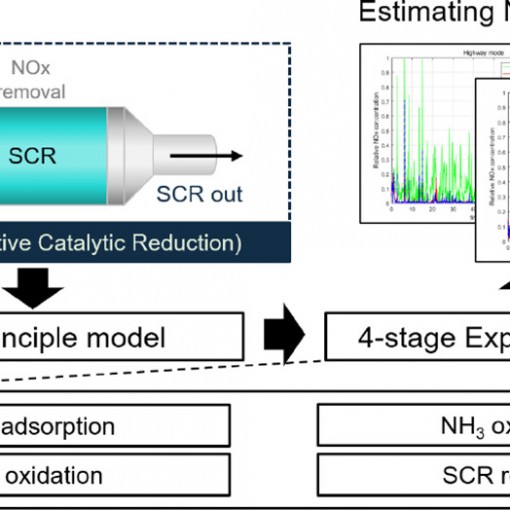
Model-based fault detecting strategy of urea-selective catalytic reduction (SCR) for diesel vehicles

Sanha Lim, Jong Min Lee* Korean Journal of Chemical Engineering │1616-1622 │2023

Selective catalytic reduction (SCR) is diesel aftertreatment using a reduction agent to reduce nitrogen oxides. Diesel engine regulations are being tightened; therefore, the diesel aftertreatment system should be operated efficiently. In the urea-SCR system, there is a possibility of various faults, e.g., catalyst deactivation by sulfur or hydrothermal aging and fault in urea injection system. These faults interfere with normal system operation and result in increase of NOx concentration at the tailpipe. To prevent this situation, it is necessary to detect system faults. In this study, a first-principle model for SCR system is presented based on mass and energy balance equations. Using the one-dimensional urea-SCR model, this research introduces a model-based fault detecting strategy for SCR system. The residuals are calculated as the difference between the model calculation and the actual catalyst system measurement with the system faults. The results of this research are used in fault diagnosis and fault tolerant control studies to meet diesel vehicle nitrogen oxide regulations even in the presence of catalyst faults.

이미지가 없습니다.

Centralized and distributed hydrogen production using steam reforming: challenges and perspectives

Ja-Ryoung Han, So-Jin Park, Hyoungtae Kim, Shinje Lee*, Jong Min Lee* Sustainable Energy Fuels │1923-1939 │2022

Steam methane reforming (SMR) has been adopted for the mass production of hydrogen that has been actively used in various industrial processes for several decades. Currently, the demand for hydrogen for small-scale domestic and vehicular applications is growing rapidly. Although essential technical elements are similar at the industrial and retail levels, large-scale centralized SMR techniques do not apply to small-scale distributed SMR systems owing to the difference in their production capacity and purposes. In this review, we summarize the state-of-the-art centralized and distributed SMR processes for large- and small-scale hydrogen production. No review has been reported on the differences and difficulties in SRM technology according to productivity. By categorizing conventional and new technologies and presenting practical issues according to production capacity, this review will contribute to the rapid adoption of decentralized SMR based hydrogen production systems.

이미지가 없습니다.

Simultaneous analysis of hydrogen productivity and thermal efficiency of hydrogen production process using steam reforming via integrated process design and 3D CFD modeling

Ja-Ryoung Han, Jae Jung Urm, Shinje Lee*, Jong Min Lee* Chemical Engineering Reserach and Design │466-477 │2022

Steam methane reforming (SMR) is a widely adopted method for H2 production due to its advantages in the maturity of technology and economic feasibility. Since the optimization of an SMR reactor in the overall H2 production process is important to reduce energy loss and increase productivity, the analysis of the reactor is essential. However, in order to increase the efficiency of the entire H2 production process, it is necessary to analyze the entire process in an integrated manner rather than focusing on an SMR reactor. To this end, we develop a computational fluid dynamics (CFD) model of the SMR reactor and integrate it with the H2 production process based on experimental data, to simultaneously evaluate the H2 productivity and process thermal efficiency. The reactor yield and process efficiency according to operating conditions were evaluated by combining the exact rate of heat transfer of the SMR reactor into process simulation. The integration model achieved higher accuracy of modeling the process than the individual modeling of the SMR reactor and the H2 production process. From the parametric study via the integration model, the most advantageous set of operating conditions of the H2 production process is proposed.

이미지가 없습니다.

Analysis of the effect of pipe rupture on adjacent pipes using CFD

Cheolwon Eo, Shikyung Yoon, Jong Min Lee* Journal of Loss Prevention in the Process Industries │104720 │2022

Although pipeline is an important asset in the transport of fluids, there are many aged pipelines without proper maintenance or replacement. In particular, underground pipelines cause various accidents every year as they are invisible and difficult to manage. Methodologies have been studied to safely manage such pipelines, but few methodologies have analyzed the effect of accident on adjacent pipe. In this study, the behavior of the fluid emitted in the event of a pipe rupture and its effect on adjacent pipe are analyzed using CFD. The simulation is conducted on the above-ground pipeline where air exists between the pipe, and the maximum impact force applied to adjacent pipe is calculated given the transport fluid, operating pressure, and distance between pipelines. In the case of underground pipeline, the soil-induced effect is qualitatively reflected in the simulation results.

이미지가 없습니다.

Integration of reinforcement learning and model predictive control to optimize semi-batch bioreactor

Tae Hoon Oh, Hyun Min Park, Jong Woo Kim, Jong Min Lee* AIChE Journal │e17658 │2022

As the digital transformation of the bioprocess is progressing, several studies propose to apply data-based methods to obtain a substrate feeding strategy that minimizes the operating cost of a semi-batch bioreactor. However, the negligent application of model-free reinforcement learning (RL) has a high chance to fail on improving the existing control policy because the available amount of data is limited. In this article, we propose an integrated algorithm of double-deep Q-network and model predictive control. The proposed method learns the action-value function in an off-policy fashion and solves the model-based optimal control problem where the terminal cost is assigned by the action-value function. For simulation study, the proposed method, model-based method, and model-free methods are applied to the industrial scale penicillin process. The results show that the proposed method outperforms other methods, and it can learn with fewer data than model-free RL algorithms.

이미지가 없습니다.

Sparse Bayesian long short-term memory networks for computationally efficient stochastic modeling of plasma etch processes

Damdae Park, Sangwon Ryu, Gon-Ho Kim, Jong Min Lee* Computers & Chemical Engineering │107696 │2022

As the required feature size of microelectronic devices continues to shrink, stringent process control of plasma etch process has become a critical issue in semiconductor manufacturing. In order to design a high-performance controller and its verification, there have been increasing needs for a high-fidelity model. This study proposes a probabilistic surrogate modeling method, named sparse Bayesian long short-term memory networks (SBLSTM). In SBLSTM, all the neural weights are given by parameterized Gaussian distributions, and the resulting distributional parameters are trained to maximize the posterior probability of the dataset. By imparting stochastic property to versatile neural network models, the proposed method allows modeling plasma etch processes’ complex behaviors. In order to find an optimal model structure, we propose a posteriori dropout, which eliminates insignificant weights after training based on their relative importance. The effectiveness of the proposed method is demonstrated through experimental data and compared with three conventional surrogate modeling techniques.

이미지가 없습니다.

Techno-economic analysis of micro-grid system design through climate region clustering

Jaehyun Shim, Damdae Park, Hoon Taek Chung, Hyuncheol Ryu, Gobong Choi, Jong Min Lee* Energy Conversion and Management │116411 │2022

Micro-grid systems utilizing renewable energy sources (RES) have emerged as a viable technology for addressing the present global climate crisis. Nonetheless, the considerable uncertainty of RES and the climatic variability make it challenging to build a suitable system. To understand the implications of climate on the optimal micro-grid design, we present a techno-economic analysis of 13,488 regions. On the basis of climatic similarities, the locations were divided into nine groups, and the correlations between climates and optimal designs were analyzed. Based on their climate sensitivity and the change trend of two climates, we discovered that they fell into four separate categories. In climate-sensitive places where PV module size increases 6.79 ± 0.13% and wind turbine size increases at the same rate, the overall cost increases 7.6%, which is 2–4 times that of other types. On the other side, climate-insensitive locations with same/opposite tendencies experience the least change in overall micro-grid system size due to climate change. Although total system sizes are most sensitive in climate-sensitive regions with opposing tendencies, their total costs vary the least due to a trade-off between PV module and wind turbine size variations. The analyses reveal the effects of climate on the sizes and costs of micro-grid systems and emphasize the importance of considering climatic fluctuations when designing micro-grid systems.

이미지가 없습니다.

Primal-dual differential dynamic programming: A model-based reinforcement learning for constrained dynamic optimization

Jong Woo Kim, Tae Hoon Oh, Sang Hwan Son, Jong Min Lee* Computers & Chemical Engineering │108004 │2022

The main objective of this study is to develop primal–dual differential dynamic programming (DDP), a model-based reinforcement learning (RL) framework that can handle constrained dynamic optimization problems. DDP has advantages of being able to provide a closed-loop policy and having computational complexity that grows linearly with respect to the time horizon. To take advantage, the DDP should consider optimality and feasibility for the disturbed state during closed-loop operations. Previous DDPs consider the feasibility only for the nominal state condition and can handle limited types of constraints. In this paper, we propose a primal–dual DDP incorporating modified augmented Lagrangian that can handle general nonlinear constraints. We pay special attention to obtain the feasible policy when active set changes due to the state perturbations, using path-following predictor–corrector approach. The developed framework method was applied to van der Pol oscillator and batch crystallization process, thereby validating the key aspects of this study.

이미지가 없습니다.

Multi-strategy control to extend the feasibility region for robust model predictive control

Tae Hoon Oh, Jong Woo Kim, Sang Hwan Son, Dong Hwi Jeong*, Jong Min Lee* Journal of Process Control │25-33 │2022

This paper proposes a multi-strategy control scheme, which modifies the optimal control problem of robust model predictive control (RMPC) to reduce the on-line computational load or extend the feasible region. The proposed controller is designed to stabilize the system with respect to a subset of the disturbance set. If the disturbance is realized from the rest of the subset, another control strategy is automatically involved to keep the state inside the pre-determined bounded set. The existence of this pre-determined set is proven, and an efficient algorithm is proposed to generate this set. In addition, it is shown that the recursive feasibility and stability of the original RMPC is sustained for the proposed controller. This implies that the proposed method can be applied to a wide range of existing RMPC. Three illustrative examples describe the fundamental ideas and practical advantages.

이미지가 없습니다.

Learning of model-plant mismatch map via neural network modeling and its application to offset-free model predictive control

Sang Hwan Son, Jong Woo Kim, Tae Hoon Oh, Dong Hwi Jeong, Jong Min Lee* Journal of Process Control │112-122 │2022

We propose an improved offset-free model predictive control (MPC) framework, which learns and utilizes the intrinsic model-plant mismatch map, to effectively exploit the advantages of model-based and data-driven control strategies and overcome the limitation of each approach. In this study, the model-plant mismatch map on steady-state manifold is approximated via artificial neural network (ANN) modeling based on steady-state data from the process. Though the learned model-plant mismatch map can provide the information at the equilibrium point (i.e., setpoint), it cannot provide model-plant mismatch information during transient state. To handle this, we additionally apply a supplementary disturbance variable which is updated from a revised disturbance estimator considering the disturbance value obtained from the learned model-plant mismatch map. Then, the learned and supplementary disturbance variables are applied to the target problem and finite-horizon optimal control problem of the offset-free MPC framework. By this, the control system can utilize both the learned model-plant mismatch information and the stabilizing property of the nominal disturbance estimator. The closed-loop simulation results demonstrate that the proposed offset-free MPC scheme utilizing the model-plant mismatch map learned via ANN modeling efficiently improves the closed-loop reference tracking performance of the control system. Additionally, the zero-offset tracking condition of the developed framework is mathematically examined.

이미지가 없습니다.

Idle speed control with low-complexity offset-free explicit model predictive control in presence of system delay

Sang Hwan Son, Se-Kyu Oh, Byung Jun Park, Min Jun Song, Jong Min Lee* Control Engineering Practice │104990 │2022

The requirement for continual improvement of idle speed control (ISC) performance is increasing due to the stringent regulation on emission and fuel economy these days. In this regard, a low-complexity offset-free explicit model predictive control with constraint horizon is designed to regulate the idle speed under unmeasured disturbance in presence of system delay with rigorous formulation. Particularly, we developed a high-fidelity 4-stroke gasoline-direct injected spark-ignited engine model based on first-principles and test vehicle driving data, and designed a model predictive ISC system. To handle the delay from intake to torque production, we constructed a control-oriented model with delay augmentation. To reject the influence of torque loss, we implemented the offset-free MPC scheme with disturbance model and estimator. Moreover, to deal with the limited capacity assigned for the controller in the engine control unit and the short sampling interval of the engine system, we formulated a low-complexity multiparametric quadratic program with constraint horizon in presence of system delay in state and input variables, and obtained an explicit solution map. To demonstrate the performance of the designed controller, a series of closed-loop simulations were performed. The developed explicit controller showed proper ISC performance in presence of torque loss and system delay.

Automated Model Calibration for Urea-SCR Systems Using Test-Rig Data

Sanha Lim, Byungjun Lee, Sungmu Choi, Yeonsoo Kim*, Jong Min Lee* Industrial & Engineering Chemistry Research │13523-13531 │2022

Selective catalytic reduction (SCR) systems with urea injectors are widely utilized and can meet stricter NOx regulations for both light- and heavy-duty diesel vehicles. In this study, we propose a systematic parameter estimation strategy for a one-dimensional SCR model. Dual-site kinetics with 12 kinetic reactions and 28 kinetic parameters are considered in the SCR model. We estimate subsets of parameters sequentially since it is difficult to estimate all of the parameters at once. To this end, four test-rig experimental data obtained under ammonia storage, ammonia oxidation, nitrogen monoxide oxidation, and SCR reaction were used separately. We estimate a subset of parameters corresponding to the relevant reactions using each rig data because only some reactions occur under each rig experiment. To demonstrate the efficacy of this approach, we estimate the parameters simultaneously using one set of real driving data and validate the model using a new set of real driving data that was not utilized for parameter estimation. With the prediction errors for the test set of real driving data, the proposed technique, which estimates a subset of parameters sequentially, has a 7.35% lower error.

이미지가 없습니다.

Hybrid modeling approach for polymer melt index prediction

Min Jun Song, Sung Hyun Ju, Sungkyu Kim, Seung Hwan Oh, Jong Min Lee* Journal of Applied Polymer Science │e52987 │2022

This research paper presents a hybrid modeling approach that combines mechanistic modeling and machine learning to predict the melt index (MI) of an industrial styrene–acrylonitrile (SAN) polymerization process. MI is one of the important quality variables of a thermoplastic polymer and is measured offline infrequently. The accurate prediction of MI is necessary for monitoring and quality control of the process. The proposed hybrid model consists of two parts: a white-box submodel and a black-box submodel. First, the white-box submodel based on the process knowledge such as reaction kinetics predicts the polymerization-related variables such as average molecular weights and rate of polymerization from measurement data. Then, the black-box submodel which is a machine learning soft sensor model is trained to predict MI of the polymer product from both the output of the white-box submodel and measurement data. The proposed approach is used to compare the MI prediction performance of hybrid models to that of data-only machine learning soft sensor models and mechanistic models. As a result, the results indicate that the proposed hybrid model has an increased prediction accuracy and generalizability for MI prediction in an industrial polymerization process.

이미지가 없습니다.

Physics-informed deep learning for data-driven solutions of computational fluid dynamics

Solji Choi, Ikhwan Jung, Haeun Kim, Jonggeol Na*, Jong Min Lee* Korean Journal of Chemical Engineering │515-528 │2022

Computational fluid dynamics (CFD) is an essential tool for solving engineering problems that involve fluid dynamics. Especially in chemical engineering, fluid motion usually has extensive effects on system states, such as temperature and component concentration. However, due to the critical issue of long computational times for simulating CFD, application of CFD is limited for many real-time problems, such as real-time optimization and process control. In this study, we developed a surrogate model of a continuous stirred tank reactor (CSTR) with van de Vusse reaction using physics-informed neural network (PINN), which can train the governing equations of the system. We propose a PINN architecture that can train every governing equation which a chemical reactor system follows and can train a multi-reference frame system. Also, we investigated that PINN can resolve the problem of neural network that needs a large number of training data, is easily overfitted and cannot contain physical meaning. Furthermore, we modified the original PINN suggested by Raissi to solve the memory error and divergence problem with two methods: Mini-batch training and weighted loss function. We also suggest a similarity-based sampling strategy where the accuracy can be improved up to five times over random sampling. This work can provide a guideline for developing a high performance surrogate model of the chemical process.

이미지가 없습니다.

Molecular weight distribution modeling of LDPE in a continuous stirred-tank reactor using coupled deterministic and stochastic approach

Solji Choi, Yongkyu Lee, Seongho Park, Jong Min Lee* Korean Journal of Chemical Engineering │798-810 │2022

A hybrid approach that combines the method of moments and Monte Carlo simulation to predict the molecular weight distribution of low-density polyethylene for a continuous stirred tank reactor system is proposed. A ‘Block’, which is repeating reaction group, is introduced for the calculation cost-effective simulation. This model called the ‘block Kinetic Monte Carlo’ is ∼10 to 32 times faster than Neuhaus’s model. The model can be applied to any steady state system and provide a calculation cost reduction effect, where one reaction is much faster than others, for example, the propagation reaction. Furthermore, we performed a case study on the effects of the system temperature and initiator concentration on the MWD and reaction rate ratio. Based on the simulation results of 180 case studies, we determined a quantitative guideline for the appearance of shoulder, which is a function of the rate ratio of reactions to the propagation reaction.

Online synchronization in latent variable model predictive control for trajectory tracking of an uneven batch process

Hye Ji Lee, Shinje Lee*, Jong Min Lee* Industrial & Engineering Chemistry Research │594-604 │2022

The performance of the batch trajectory tracking algorithm is affected by batch-to-batch variation, which includes irregular phase transitions and batch durations. The latent variable model predictive control is modified to obtain the desired specification by applying an online alignment to assign the prediction model and update the future reference. One of the multiple models is selected at every time step to improve the prediction performance using the relationship between the accumulated measurements of the ongoing batch. The future reference is synchronized based on the current measurement of the ongoing batch; therefore, a partially reduced or extended reference trajectory is adaptively applied to the batches. Compared with the conventional latent variable model predictive control algorithm, the proposed method for assigning a prediction model can improve the trajectory tracking performance not only for the entire batch but also for the phase transition region. Compared with the fixed reference case, the proposed method for aligning the reference can reduce the tracking error at the end of the batch. The batch duration is adaptively decided using the updated reference, reducing the batch duration as long as the ongoing batch adheres to the reduced reference. The proposed methods are verified using a case study of the trajectory tracking problem in industrial penicillin production.

Data-driven inference of synthesis guidelines for high-performance zeolite-based selective catalytic reduction catalysts at low temperatures

Shinyoung Bae, Hwangho Lee, Junseop Shin, Hyun Sub Kim, Yeonsoo Kim, Do Heui Kim*, Jong Min Lee* Chemistry of Materials │7761-7773 │2022

Numerous zeolite-based selective catalytic reduction (SCR) catalysts have been investigated to improve nitrogen oxide (NOx) removal efficiency at low temperatures of 25–200 °C in diesel vehicles. However, the majority of these studies examined only one of each feature’s effects. The catalysis mechanism consists of complex reactions, and the various features interact, making it difficult to predict their combinatorial effects on the catalytic activity. Recently, machine learning-based models have been widely employed in catalysis science to infer hidden information about catalysts without knowledge of the underlying physical principles. Interpretable machine learning models are particularly useful for catalyst research because they can explain the causal relationship between characteristics and catalytic performance. In this study, we construct a machine learning model utilizing a decision tree, one of the representative interpretable machine learning models. Using this model, we evaluate the causal relationship between features and the NOx removal efficiency of zeolite-based SCR catalysts at low temperatures, which is difficult to deduce due to the high number of features. Additionally, we extract several synthesis guidelines for catalysts that show superior NOx removal performance at low temperatures. New catalysts were synthesized using the proposed rules, and their performance was validated experimentally.

이미지가 없습니다.

Safety distance analysis to prevent pipeline chain accidents

Cheolwon Eo, Jong Min Lee* Korean Journal of Chemical Engineering │1158-1164 │2022

A framework for analyzing the safety distance between pipes is proposed in this study. To calculate the probability of a chain accident, the limit state function of reliability-based design and assessment is applied, and the reliability target is obtained using the risk criteria and the consequence model. As a result of analyzing these two results to calculate the safety distance between pipes, it is found that a greater safety distance should be kept in cases of the higher the pipe pressure, the larger impact force of the transport fluid, and the more dangerous fluid which has the greater consequence. The proposed study can serve as a systematic framework for recommending a safety distance, which allows for efficient and safe pipe management.

이미지가 없습니다.

Development of 3D CFD model of compact steam methane reforming process for standalone applications

Ja-Ryoung Han, Shinje Lee*, Jong Min Lee* Korean Journal of Chemical Engineering │1182-1193 │2022

The demand for sustainable energy has increased with growing concerns of environmental damage. H2 has attracted considerable attention as a clean and renewable energy carrier that can be used in fuel cells. Industrial H2 has been manufactured to produce synthetic gas in large-capacity plants using steam methane reforming (SMR). However, a compact H2 production system is needed that maintains production efficiency on a small scale for fuel cell applications. In this study, a three-dimensional computational fluid dynamics model of a compact steam reforming reactor was developed based on the experimental data measured in a pilot-scale charging station. Using the developed model, one can predict all the compositions of the reformate produced in the reactor and simultaneously analyze the temperatures of the product, flue gas, and the reaction tube. Therewith, case studies were conducted to compare the H2 production performance of the eight different structures and sizes of the proposed reformer. Based on the results, a design improvement strategy is proposed for an efficient small-scale SMR process.

이미지가 없습니다.

Data-driven model predictive control design for offset-free tracking of nonlinear systems

Byungjun Park, Jong Woo Kim*, Jong Min Lee* International Journal of Control │1408-1423 │2022

We propose a design of data-driven Model Predictive Control (MPC) using a suboptimal trajectory and the linear time-varying (LTV) models from data-driven trajectory optimisation that achieves offset-free tracking. Data-driven constrained differential dynamic programming (CDDP) is exploited to improve the trajectory iteratively without the knowledge of the nonlinear model. A trajectory is divided to the transient and steady state regions, controlled by the Linear time-varying MPC (LTVMPC) and the offset-free linear MPC (LMPC), respectively. We prove the feasibility of the proposed LTVMPC in the transient region, and the offset-free tracking property of LMPC. The proposed scheme is validated to a continuous stirred tank reactor (CSTR) process. Simulation studies show that the suboptimal trajectory and LTV models are generated by CDDP, and the proposed MPC achieves offset-free tracking and disturbance rejection for a set of initial conditions and set points in the operating region.

이미지가 없습니다.

Real-time synchronization with expected distribution of synchronized index for on-line monitoring of uneven multiphase batch process

Hye Ji Lee, Jaehan Bae, Dong Hwi Jeong*, Jong Min Lee* Computers and Chemical Engineering │107490 │2021

Because of the inconsistent batch duration, identifying the progress of an ongoing batch highly affects the performance of the on-line monitoring. In this paper, a real-time synchronization scheme is proposed based on relative proceeding rates, newly defined as the time difference between the trajectory of an ongoing batch and the nominal trajectory. As the relative proceeding rate indicates how early the point attains its desired value compared to the nominal trajectory, the synchronized index is obtained on-line by estimating the relative proceeding rate. Compared with the conventional methods that optimize the synchronized index with local constraints, the proposed method can estimate its distribution using the relative proceeding rate without applying local constraints. It can reduce synchronization errors and increase the accuracies of the state estimation and fault detection. The utility of the proposed method is verified via a case study of industrial penicillin production with a real-time unmeasurable variable.

이미지가 없습니다.

Data-driven fault detection for chemical processes using autoencoder with data augmentation

Hodong Lee, Changsoo Kim, Dong Hwi Jeong*, Jong Min Lee* Korean Journal of Chemical Engineering │2406-2422 │2021

Process monitoring plays an essential role in safe and profitable operations. Various data-driven fault detection models have been suggested, but they cannot perform properly when the training data are insufficient or the information to construct the manifold is confined to a specific region. In this study, a process monitoring framework integrated with data augmentation is proposed to supplement rare but informative samples for the boundary regions of the normal state. To generate data for augmentation, a variational autoencoder was employed to exploit its advantage of stable convergence. For the construction of the process monitoring system, an autoencoder that can extract useful features in an unsupervised manner was used. To illustrate the efficacy of the proposed method, a case study for the Tennessee Eastman process was applied. The results show that the proposed method can improve the monitoring performance compared to the autoencoder without data augmentation in terms of fault detection accuracy and delay, particularly within the feature space.

Droplet-based evaporative system for the estimation of protein crystallization kinetics

Moo Sun Hong, Amos E. Lu, Jaehan Bae, Jong Min Lee, Richard D. Braatz* Crystal Growth & Design │6064-6075 │2021

Crystallization is a potential cost-effective alternative to chromatography for the purification of biotherapeutic proteins. Crystallization kinetics are required for the design and control of such processes, but only a limited quantity of proteins is available during the initial stage of process development. This article describes the design of a droplet-based evaporative system for the evaluation of candidate crystallization conditions and the estimation of kinetics using only a droplet (on the order of μL) of protein solution. The temperature and humidity of air fed to a flow cell containing the droplet are controlled for evaporation and rehydration of the droplet, which are used for manipulating supersaturation. Dual-angle images of the droplet are taken and analyzed on-line to obtain the droplet volume and crystal sizes. Crystallization kinetics are estimated based on a first-principles process model and experimental data. Tight control of temperature and humidity of the air, fast and accurate image analysis, and accurate estimation of crystallization kinetics are experimentally demonstrated for a model protein lysozyme. The estimated kinetics are suitable for the model-based design and control of protein crystallization processes.

이미지가 없습니다.

Data-driven offset-free multilinear model predictive control using constrained differential dynamic programming

ByungJun Park, Jong Woo Kim*, Jong Min Lee* Journal of Process Control │1-16 │2021

Multilinear model predictive control (MLMPC) can regulate a nonlinear process with wide operating regions based on a set of linear models. Although online computational cost is reduced compare to nonlinear MPC (NMPC), it is difficult to obtain a reliable full nonlinear model or set of linear models in practice. In this paper, we propose a combination of MLMPC with differential dynamic programming (DDP), so that the system can be controlled offset-free in the absence of a full nonlinear model. DDP is a ‘trajectory-centric’ optimization technique that solves nonlinear optimal control problems. The trajectory can be optimized even if the full model for the system is unknown, because DDP uses only the gradients around the visited trajectory, which is easily obtained by input excitations. Moreover, the gradient information can provide linear models in the subsequent MLMPC step. In the proposed scheme, a novel model selection based on gap metric and weighting method are employed for MLMPC. We prove the offset tracking property of DDP assisted MLMPC. A continuous stirred tank reactor (CSTR) process is studied to demonstrate the effectiveness of the proposed algorithms. Simulation studies show that CDDP designed by the proposed algorithm improves the trajectory over iterations, and the resulting MLMPC achieves offset-free tracking property regardless of an initial point and a set-point in the operating region.

이미지가 없습니다.

Model-based reinforcement learning and predictive control for two-stage optimal control of fed-batch bioreactor

Jong Woo Kim, Byung Jun Park, Tae Hoon Oh, Jong Min Lee* Computers & Chemical Engineering │107465 │2021

In this study, we propose a two-stage optimal control framework for a fed-batch bioreactor. The high-level controller aims to obtain the optimal feed trajectory that maximizes the final time productivity and yield using a nominal model. By contrast, the low-level controller maintains the high-level performance in the presence of the model-plant mismatch and real-time disturbances. This two-stage decomposition can perform the closed-loop operation with less online recomputation. To solve the high-level optimization, differential dynamic programming (DDP), a model-based reinforcement learning that employs the derivatives of the model is applied. Three types of low-level controllers are proposed: DDP controller, a model predictive control (MPC) that tracks the high-level trajectory, and an economic MPC. We first validate that DDP yields as good result as the direct method. Second, we compare the three low-level controllers and verify the necessity of the two-stage decomposition through the studies on a bioreactor.

Bayesian optimization of semicontinuous carbonation process operation recipe

Dongwoo Lee, Jonggeol Na, Damdae Park, Jong Min Lee* Industrial & Engineering Chemistry Research │9871–9884 │2021

We develop a pilot-scale semicontinuous aqueous mineral carbonation process that captures 40 tons of CO2 per day by combining a 20 wt % aqueous Ca(OH)2 solution with flue gas containing 15 vol % CO2. From the pilot-plant operation recipe (the so-called “base case”), we propose two new operation recipes to minimize the quantity of reactant used (Lt) and maximize the replenishment period (Pr): a sequence including both a continuous and discrete flow (the so-called “continuous case”) and one involving additional reactant replenishment (the so-called “buffer case”). A multiobjective Bayesian optimization was adopted to optimize the operation recipe and minimize the number of simulations. Compared to the base case, the two proposed recipes were found to prolong the Pr by factors of ∼12 and ∼2.4 with increases in Lt of ∼4.6 and ∼2.6%, respectively. We anticipate that the two proposed recipes will provide operational flexibility by extending the boundaries.

이미지가 없습니다.

Design and economic analysis of biodiesel production process of simultaneous supercritical transesterification and partial hydrogenation using soybean oil with Pd/Al2O3 catalyst

Dongwoo Lee, Juneun Choi, Youn-Woo Lee, Jong Min Lee* Chemical Engineering Research and Design │264-279 │2021

A kinetic study of the simultaneous supercritical transesterification and partial hydrogenation (SSTPH) process using soybean oil with Pd/Al2O3 catalyst was conducted. In addition, process design and economic analysis were conducted to investigate the profitability of three different continuous biodiesel production processes, each with a production capacity of 40,000 tonnes/h, including a conventional supercritical process, SSTPH process using Cu catalyst, and SSTPH process using Pd/Al2O3 catalyst. The contents of methyl oleate in the biodiesel products from the three processes were 22.9, 56.9, and 77.9 wt%, respectively. It was found that the total manufacturing costs for the SSTPH processes were higher than that of the conventional supercritical process due to partial hydrogenation. However, the total capital investment for the SSTPH process with Pd/Al2O3 was the lowest owing to the mild reaction condition. Overall, the SSTPH process using Pd/Al2O3 was the most economically feasible. Sensitivity analysis of the net present values (NPVs) was conducted according to the material prices and the plant capacity. The results of the sensitivity analysis show that the NPVs for the three processes are most sensitive to the biodiesel price. Consequently, the SSTPH process with Pd/Al2O3 had the lowest break-even biodiesel price despite the same price of biodiesel.

이미지가 없습니다.

Design study of a cryogenic distillation column for hydrogen isotope separation system

Jae Jung Urm, Damdae Park, Jae-Uk Lee, Min Ho Chang, Jong Min Lee* Fusion Engineering and Design │112736 │2021

This paper presents a design study of a cryogenic distillation column for hydrogen isotope separation. The column was modeled as a theoretical equilibrium-based stage column. Thermodynamic properties were evaluated with the Peng–Robinson Twu equation of state model. The liquid holdup and pressure drop of each theoretical stage were modeled with a general packed column model. The models were implemented in an equation-oriented optimization framework. The effects of parameters such as the number of theoretical stages, feed location, diameter, flow rate of the distillate, and condenser duty on the tritium inventory, total pressure drop, and product quality were investigated. An optimal design that minimizes the total amount of tritium in the liquid holdup under a tritium product quality constraint and non-flooding constraints is presented.

Clustered manifold approximation and projection for semisupervised fault diagnosis and process monitoring

Damdae Park, Jonggeol Na, Jong Min Lee* Industrial & Engineering Chemistry Research │9521–9531 │2021

With increasing demands on product quality and safety requirements, modern industrial processes are highly instrumented and the data collected are being utilized to monitor and diagnose processes. In many cases, the process records include labels that indicate process operating conditions or prior knowledge of the sample points, which can be used to improve diagnostic performance. For this reason, semisupervised methods that can utilize both labeled and unlabeled data are recently gaining interest. In this article, we propose a novel manifold learning-based semisupervised process monitoring method, named Clustered Manifold Approximation and Projection (CMAP). In CMAP, a data manifold is approximated ahead of projection, where the distance on the manifold is defined by the pairwise interaction between the data points induced by metric and nonmetric attributes. This allows simultaneous utilization of limited labeled data and abundant unlabeled data, as well as enables tracking and controlling their effect on the projection. By postulating a well-behaved manifold that preserves discriminant and temporal characteristics of the process, CMAP shows superior performance in the process monitoring and fault diagnosis tasks. The effectiveness of the proposed method is assessed on a dataset obtained from the Tennessee Eastman process and compared with five competing methods.

이미지가 없습니다.

Dynamic optimization of cryogenic distillation operation for hydrogen isotope separation in fusion power plant

Damdae Park, Jae Jung Urm, Jae-Uk Lee, Min Ho Chang, Jong Min Lee* International Journal of Hydrogen Energy │24135-24148 │2021

Stable operation of a hydrogen isotope separation system is one of the most important issues in the sustainable operation of fusion power plants. Owing to the present limitation in retention time of fusion reaction, fusion reactors are run in repeated batch operations, causing large fluctuating flows in the system. Hence, to reliably produce required products, counteractive operational strategies must be devised. To this end, we perform dynamic optimization in this paper to derive an optimal control policy that can minimize the tritium inventory and satisfy the product quality specifications. In addition, a rigorous dynamic model for packed columns is developed to simulate realistic behaviors of cryogenic distillation. We demonstrate that the optimization results yield vital operational strategies, such as operation mode switching, without any expertise provided.

이미지가 없습니다.

Design of switching multilinear model predictive control using gap metric

Byung Jun Park, Yeonsoo Kim*, Jong Min Lee* Computers & Chemical Engineering │107317 │2021

Multilinear model predictive control is a strategy to track various set-points in a nonlinear process with a wide operating region, because it can predict the dynamic behavior of a part of the operating region using a linear model or weighted summation of linear models. In addition, it is computationally efficient compared to nonlinear model predictive control. The gap metric is exploited to evaluate the weights of linear models at each sampling time. In this work, we propose the design of local controllers for different operating regions using the gap metric, and prove that each local controller has the offset-free tracking property in the corresponding part of the operating region. We also construct a graph to find the optimal path from an initial point to a set-point and propose a switching strategy using the local controllers and the optimal path. It is proved that the resulting global controller can steer the state to anywhere in the operating region. A continuous stirred tank reactor process is studied to demonstrate the effectiveness of the proposed algorithms. Simulation studies show that the controllers designed by the proposed algorithm achieve the offset-tracking property when the initial point and the set-point are randomly chosen in the operating region.

이미지가 없습니다.

Automatic control of simulated moving bed process with deep Q-network

Tae Hoon Oh, Jong Woo Kim, Sang Hwan Son, Hosoo Kim, Kyungmoo Lee, Jong Min Lee* Journal of Chromatography A │462073 │2021

Optimal control of a simulated moving bed (SMB) process is challenging because the system dynamics is represented as nonlinear partial differential-algebraic equations combined with discrete events. In addition, product purity constraints are active at the optimal operating condition, which implies that these constraints can be easily violated by disturbance. Recently, artificial intelligence techniques have received significant attention for their ability to address complex problems, involving a large number of state variables. In this study, a data-based deep Q-network, which is a model-free reinforcement learning method, is applied to the SMB process to train a near-optimal control policy. Using a deep Q-network, the control policy of a complex dynamic system can be trained off-line as long as a sufficient number of data is provided. These data can be efficiently generated by performing numerical simulations in parallel on multiple machines. The on-line computation of the control input using a trained Q-network is fast enough to satisfy the computational time limit for the SMB process. However, because the Q-network does not predict the future state, it is not possible to explicitly impose state constraints. Instead, the state constraints are indirectly imposed by providing a relatively large penalty (negative reward) when the constraints are violate. Furthermore, logic-based switching control is utilized to limit the ranges of the extract and raffinate purities, which helps to satisfy the state constraints and reduce the regions in the state space for reinforcement learning to explore. The simulation results demonstrate the advantages of applying deep reinforcement learning to control the SMB process.

이미지가 없습니다.

Multirate moving horizon estimation combined with parameter subset selection

Jaehan Bae, Yeonsoo Kim*, Jong Min Lee* Computers & Chemical Engineering │107253 │2021

Due to the model-plant mismatch in practical applications of a nonlinear model, it is necessary to estimate both states and model parameters online. However, when the number of uncertain parameters is large, it is difficult to estimate all the parameters due to a lack of information in measurements. Under this condition, model prediction can be inaccurate although the current states are accurately estimated. To improve the accuracy of both state estimation and prediction, we propose a moving horizon estimation combined with a parameter subset selection scheme. In the proposed MHE framework, a subset of estimable parameters is selected within each horizon. Then, only the selected parameters are estimated along with the state variables. The proposed method is illustrated with the numerical example of a fed-batch bioreactor. The result shows that the proposed method improves the accuracy of model prediction, compared to the conventional MHE, while maintaining the state estimation performance.

이미지가 없습니다.

A two-way coupled CFD-DQMOM approach for long-term dynamic simulation of a fluidized bed reactor

Minjun Kim, Kyoungmin Lee, Youngseok Bak, and Jong Min Lee* Korean Journal of Chemical Engineering │342–353 │2021

For the long-term dynamic simulation of a fluidized bed reactor (FBR), a two-way coupled computational fluid dynamics (CFD)-direct quadrature method of moments (DQMOM) approach is proposed. In this approach, CFD is first used only for hydrodynamic information without simulating any other chemical reactions or physical phenomena. Subsequently, the derived information is applied to the DQMOM calculation in MATLAB. From the calculation, a particle size distribution is obtained and subsequently adopted in a new CFD model to reflect the flow change caused by a change in the particle size distribution. Through several iterative calculations, long-term dynamic simulations are performed. To evaluate the efficacy of the proposed approach, the results from the suggested approach are compared for 60 s with those of the CFD-quadrature method of moments (QMOM) approach, which calculates hydrodynamics and physical phenomena simultaneously in CFD. The proposed approach successfully simulated the FBR for 6 h. The results confirmed that the proposed method can simulate complex flow patterns, which cannot be obtained in conventional CFD models. Another advantage of the approach is that it can be applied to various industrial multiphase reactors without any tuning parameters.

이미지가 없습니다.

Convergence analysis of the deep neural networks based globalized dual heuristic programming

Jong Woo Kim, Tae Hoon Oh, Sang Hwan Son, Dong Hwi Jeong*, Jong Min Lee b* Automatica │109222 │2020

Globalized dual heuristic programming (GDHP) algorithm is a special form of approximate dynamic programming (ADP) method that solves the Hamilton–Jacobi–Bellman (HJB) equation for the case where the system takes control-affine form subject to the quadratic cost function. This study incorporates the deep neural networks (DNNs) as a function approximator to inherit the advantages of which to express high-dimensional function space. Elementwise error bound of the costate function sequence is newly derived and the convergence property is presented. In the approximated function space, uniformly ultimate boundedness (UUB) condition for the weights of the general multi-layer NNs weights is obtained. It is also proved that under the gradient descent method for solving the moving target regression problem, UUB gradually converges to the value, which exclusively contains the approximation reconstruction error. The proposed method is demonstrated on the continuous reactor control in aims to obtain the control policy for multiple initial states, which justifies the necessity of DNNs structure for such cases.

이미지가 없습니다.

Heuristic rules and automation for optimal design of distillation column

Hyunyeob Chae*, Jongmin Lee, Kwangseop Jung Korean Chemical Engineering Research │550-564 │2020

Distillation columns are one of the main equipment used for the separation of chemical components in petrochemical process design. However, in spite of the efficient operation in wide range, and the advantage of data collection for equipment verification, the distillation columns are inherently known for high energy consumption and capital cost. Hence, the trade-off analysis needs to be done between investment cost and operation cost to develop the most economical distillation columns. This study was conducted using Aspen Plus, a popular process simulation program, in the pursuit of broad application by as many process engineers as possible. In this paper, design variables for optimization of distillation columns were defined to improve emphatically the design quality with reducing erratic practice of many engineers. In addition, by eliminating unnecessary reviewing step and establishing systematic and efficient procedures, the amount of time for design and human resources were minimized. Aspen Process Economic Analyzers (APEA) program was introduced in order to calculate the investment cost reliably, and the efficient systematic procedure for utilization of APEA was established.

이미지가 없습니다.

Model-based reinforcement learning for nonlinear optimal control with practical asymptotic stability guarantees

Yeonsoo Kim, Jong Min Lee* AIChE Journal │2020

We propose a new reinforcement learning approach for nonlinear optimal control where the value function is updated as restricted to control Lyapunov function (CLF) and the policy is improved using a variation of Sontag's formula. The practical asymptotic stability of the closed-loop system is guaranteed during the training and at the end of training without requiring an additional actor network and its update rule. For a single-layer neural network (NN) with exact basis functions, the approximate function converges to the optimal value function, resulting in the optimal controller. When a deep NN is used, the level set shapes of the trained NN become similar to those of the optimal value function. Because Sontag's formula with CLF is equivalent to the optimal controller when the given CLF has the same level set shapes as the optimal value function, Sontag's formula with the trained NN provides a nearly optimal controller.

이미지가 없습니다.

A model-based deep reinforcement learning method applied to finite-horizon optimal control of nonlinear control-affine system

Jong Woo Kim, Byung Jun Park, Haeun Yoo, Tae Hoon Oh, Jay H. Lee*, Jong Min Lee* Journal of Process Control │166-178 │2020

The Hamilton–Jacobi–Bellman (HJB) equation can be solved to obtain optimal closed-loop control policies for general nonlinear systems. As it is seldom possible to solve the HJB equation exactly for nonlinear systems, either analytically or numerically, methods to build approximate solutions through simulation based learning have been studied in various names like neurodynamic programming (NDP) and approximate dynamic programming (ADP). The aspect of learning connects these methods to reinforcement learning (RL), which also tries to learn optimal decision policies through trial-and-error based learning. This study develops a model-based RL method, which iteratively learns the solution to the HJB and its associated equations. We focus particularly on the control-affine system with a quadratic objective function and the finite horizon optimal control (FHOC) problem with time-varying reference trajectories. The HJB solutions for such systems involve time-varying value, costate, and policy functions subject to boundary conditions. To represent the time-varying HJB solution in high-dimensional state space in a general and efficient way, deep neural networks (DNNs) are employed. It is shown that the use of DNNs, compared to shallow neural networks (SNNs), can significantly improve the performance of a learned policy in the presence of uncertain initial state and state noise. Examples involving a batch chemical reactor and a one-dimensional diffusion-convection-reaction system are used to demonstrate this and other key aspects of the method.

Ranking-based parameter subset selection for nonlinear dynamics with stochastic disturbances under limited data

Jaehan Bae, Dong Hwi Jeong*, Jong Min Lee* Industrial & Engineering Chemistry Research │21854–21868 │2020

The modeling procedure for a production-scale plant includes a parameter estimation (PE) problem based on the measured data. However, when only the nominal operation data are available, however, it is often impossible to estimate all model parameters, as the PE problem becomes ill-conditioned. In this situation, it is preferable to estimate only an estimable subset of the model parameters to prevent the model from overfitting the given data, which results in poor prediction accuracy. This study suggests an algorithm for selecting and estimating a parameter subset of a stochastic model when only limited data are available. A target system is represented by stochastic differential equations with additive stochastic terms. Using a mean-squared-error-based parameter subset selection method, state disturbances and measurement errors are estimated simultaneously with the model parameters to reduce the effects of uncertainties on the PE. A virtual plant representing a fed-batch bioreactor, with 12 model parameters to be estimated, is selected for a numerical illustration. The simulation results show that the proposed method effectively manages the overfitting problem owing to the ill-conditioned PE and improves the model prediction accuracy compared to cases where all of the model parameters are estimated.

이미지가 없습니다.

Modeling long-time behaviors of industrial multiphase reactors for CO2 capture using CFD-based compartmental model

Minjun Kim, Seongeon Park, Dongwoo Lee, Soogil Lim, Minho Park, Jong Min Lee* Chemical Engineering Journal │125034 │2020

Pilot- and industrial-scale mineral carbonation plants to remove CO2 through a reaction with Ca(OH)2 were built in South Korea to address concerns related to global warming. To simulate mineral carbonation reactors with complex gas–liquid–solid interacting flow patterns, a computational fluid dynamics (CFD)-based compartmental model was developed. In the model, the reactors were divided into hundreds of zones, and each zone was assumed to be a single homogeneous reactor. Mass and heat balance equations were formulated for each zone and the entire reactor, separately. The mass flow rates between adjacent zones and initial CO2 holdup at each zone were calculated from CFD simulations, and a kinetic model, which included all the involved reactions, was built in MATLAB. The total CO2 removal efficiency, pH, and temperature changes as well as concentration profiles of CO2 and other species were predicted during batch operations. To validate the performance of the model, the simulated results were compared with the real operation data from the pilot- and industrial-scale plants. The errors at steady states were within 7% without any adjustable parameters. Furthermore, the model was used to predict the performances of reactors 2.5 and 10 times larger than the industrial-scale reactor.

이미지가 없습니다.

Move blocked model predictive control with improved optimality using semi-explicit approach for applying time-varying blocking structure

Sang Hwan Son, Tae Hoon Oh, Jong Woo Kim, Jong Min Lee* Journal of Process Control │50-61 │2020

Move blocking is an input parameterization scheme that fixes the decision variables over arbitrary time intervals, commonly referred to as blocks, and it is widely implemented in model predictive control (MPC) to reduce the computational load during on-line optimization. Since the blocking position acts as the search direction in the solution space, selection of the blocking structure has a significant effect on the optimality of moved blocked MPC. However, existing move blocked MPC schemes apply arbitrary time-invariant blocking structures without considering the optimality of the blocking structure due to the difficulty in deriving a proper time-varying blocking structure on-line. Thus, we propose a semi-explicit approach for move blocked MPC that solves a multiparametric program for the blocking position set off-line and a simplified on-line optimization problem. This approach allows for a proper time-varying blocking structure for the current state on-line. The proposed approach can efficiently improve the optimality performance of move blocked MPC with only a little additional computational cost for critical region search while guaranteeing the recursive feasibility and closed-loop stability.

이미지가 없습니다.

Ensemble learning based latent variable model predictive control for batch trajectory tracking under concept drift

Dong Hwi Jeong, Jong Min Lee* Computers & Chemical Engineering │106875 │2020

Industrial batch processes are characterized by unsteady state, multiple lines, and iterative operation. For tracking a reference trajectory varying batch-wisely, several latent variable based model predictive controllers have been proposed. In a concept drift condition where the internal dynamics of a batch change or an external factor causes a significant change in the process itself, however, maintaining a single latent variable model as in the conventional method can deteriorate the control performance. To solve this problem, we propose to combine an ensemble learning method with the latent variable model predictive control. Conventional on-line weighted ensemble learning is modified to apply to the multiple and iterative batch trajectory tracking problems. By using a total pool of local functions and historical data set, which evolves through the process and learning weights by ensemble algorithm, the detailed effects of concept drift on the process are reflected better to the ensemble latent variable model than the conventional method. Multiple and iterative batch bioreactor system having arbitrarily different intermediate maintenance times and several concept drifts is simulated to verify the efficacy of the proposed method. Simulation results show that both predictive and control performances by the proposed method are improved compared to the ones of the conventional latent variable model predictive controller.

이미지가 없습니다.

Data-driven fault diagnosis for chemical processes using transfer entropy and graphical lasso

Hodong Lee, Changsoo Kim, Sanha Lim, Jong Min Lee* Computers & Chemical Engineering │107064 │2020

Process monitoring, especially fault diagnosis, is an indispensable component in terms of process safety and profit. Since transfer entropy as a data-driven technique for fault diagnosis was proposed in the early 2000s, many attempts for application to chemical processes were reported. However, the application was limited because it requires high computational cost owing to the increased complexity and scale of chemical processes. This paper proposes an integrated transfer entropy method with the graphical lasso, a regularized optimization method for relevant subset selection. The proposed methodology exploits the outstanding performance of transfer entropy in diagnosis while mitigating the disadvantages in terms of the computational cost via the graphical lasso. To illustrate the effectiveness of the proposed method, two case studies were carried out. The SCR system, a catalytic after-treatment system for automobile exhaust gas, was examined to verify the feasibility of the proposed method. Then, the Tennessee Eastman process, which is a benchmark process, was also tested as a representative of the industrial-scale chemical process. The results of the proposed method demonstrate that in all cases it significantly reduces the computational cost of root cause analysis using transfer entropy, and even outperforms the conventional transfer entropy method for diagnosis in some particular cases.

Construction of a valid domain for a hybrid model and its application to dynamic optimization with controlled exploration

Jaehan Bae, Hye ji Lee, Dong Hwi Jeong*, Jong Min Lee* Industrial & Engineering Chemistry Research │16380–16395 │2020

A hybrid model, also called a gray-box model, utilizes a black-box and white-box model simultaneously to capture the behaviors of a complex system. When available data are not sufficient to estimate all the model parameters of the white-box model, the hybrid model can provide an improved prediction compared to using only a black-box or white-box model. However, an effective range of the hybrid model, that is, a valid domain, must be known to ensure the accuracy of the model predictions. This study proposes a method to identify the valid domain of a dynamic hybrid model and suggests its application to a dynamic optimization problem. The resulting valid domain can be easily introduced into the dynamic optimization problem by reformulating the valid domain into sets of inequality constraints. Because of the addition of the valid domain constraints, improvement by optimization using the hybrid model is limited compared to the case of unconstrained optimization. To address this issue, an iterative framework of model updates is presented. The proposed methods are applied to a numerical example of a fed-batch bioreactor to demonstrate the efficacy of the methods.

이미지가 없습니다.

Concentration model for gas releases in buildings and the mitigation effect

Changhwan Huh, Solji Choi, Jong Min Lee* Journal of Loss Prevention in the Process Industries │104135 │2020

In case of accidents involving releases of hazardous materials, calculating the gas dispersion is essential for assessing risks. In general, the leaked chemical is assumed to be instantly dispersed to the atmosphere if the leak occurs in the outdoor location. However, a different approach should be made for the incidents when sources are located inside a building. For the indoor release, the gas will be diluted prior to the release to the atmosphere and the gas release from a building to the atmosphere demands the application of another model before the dispersion calculation. The indoor release model calculates average indoor concentration and volumetric flowrate to the exterior. The model is fast and reasonably accurate compared to rigorous but time-consuming computational fluid dynamics (CFD) models. The model results were compared with experimental data, and CFD simulation results both with simple geometry to demonstrate validation and assess the performance of the indoor release model. Lastly, the behavior and effect of mitigation of indoor release were demonstrated by using the model results.

이미지가 없습니다.

Move blocked model predictive control with guaranteed stability and improved optimality using linear interpolation of base sequences

Sang Hwan Son, Byung Jun Park, Tae Hoon Oh, Jong Woo Kim, Jong Min Lee* International Journal of Control │3213-3225 │2020

To mitigate the online computational load of model predictive control, move blocking, which parameterises either the input sequence or offset from the base sequence by fixing the decision variables over arbitrary time intervals, is commonly used. However, existing move blocking schemes use a fixed base sequence only and do not fully exploit the valuable properties from various base sequences. Thus, we propose the interpolated solution-based move blocking strategy which parameterises the offset from the convex combination of two complementary base sequences – infinite-horizon linear quadratic regulator solution and shifted previous solution – and optimises the interpolation parameter as an additional decision variable in the optimal control problem. This allows the controller to exploit the valuable properties from both solutions by choosing the optimal interpolation parameter and blocked offset according to the current state online. The proposed approach efficiently improves the optimality performance whileguaranteeing the recursive feasibility and closed-loop stability.

이미지가 없습니다.

Closed-loop subspace identification of dual-rate non-uniformly sampled system under MPC with zone control

ByungJun Park, Se-Kyu Oh, Jong Min Lee* International Journal of Control Automation and Systems │2002–2011 │2020

Frequent changes in process dynamics make re-identification of a dynamic model prerequisite for sustainable application of model predictive control. When the process needs to comply with a particular operating range for product specification or safety requirement, the model should be re-identified in closed-loop. In addition to potentially poor exciting signal for the identification, another challenge is that many industrial processes are multi-rate systems whose variables have different sampling intervals. This paper proposes a re-identification method for dual-rate non-uniformly sampled systems under closed-loop with a MPC controller by lifting the original system. The proposed identification method provides accurate and realistic model compared to the model used before the identification is conducted. We also compare the identified model and the existing model by applying to MPC.

이미지가 없습니다.

Transition Model for Simulated Moving Bed Under Nonideal Conditions

Tae Hoon Oh, Se-Kyu Oh, Hosoo Kim, Kyungmoo Lee, Jong Min Lee* Industrial & Engineering Chemistry Research │21625–21640 │2019

In order to apply optimal design techniques or model-based control schemes to simulated moving bed (SMB) processes, the numerical model typically obtained by applying the finite difference method to the fixed-bed column is used. Such a model suffers from the computational load due to the numerical stability and may show low accuracy under the nonideal conditiond, where dispersion effects such as axial dispersion and mass transfer resistance are dominant. This work proposes a transition model of the SMB process that is free from the computational load and shows higher accuracy in predicting the system dynamics. The key factor is parametrizing the fundamental solution of the diffusion partial differential equation to approximate the transition behavior of the states. The simulation of the transition model is conducted on both linear and Langmuir isotherms, and the results indicate the superiority of the transition model over the conventional model in terms of both numerical accuracy and computation requirement especially under highly nonideal condition.

이미지가 없습니다.

Bayesian Inference of Aqueous Mineral Carbonation Kinetics for Carbon Capture and Utilization

Jonggeol Na, Seongeon Park, Ji Hyun Bak, Minjun Kim, Dongwoo Lee, Yunsung Yoo, Injun Kim, Jinwon Park, Ung Lee, Jong Min Lee* Industrial & Engineering Chemistry Research │8246–8259 │2019

We develop a rigorous mathematical model of aqueous mineral carbonation kinetics for carbon capture and utilization (CCU) and estimate the parameter posterior distribution using Bayesian parameter estimation framework and lab-scale experiments. We conduct 16 experiments according to the orthogonal array design and an additional one experiment for the model test. The model considers the gas–liquid mass transfer, solid dissolution, ionic reactions, precipitations, and discrete events in the form of differential algebraic equations (DAEs). The Bayesian parameter estimation framework, which we distribute as a toolbox (https://github.com/jihyunbak/BayesChemEng), involves surrogate models, Markov chain Monte Carlo (MCMC) with tempering, global optimization, and various analysis tools. The obtained parameter distributions reflect the uncertain or multimodal natures of the parameters due to the incompleteness of the model and the experiments. They are used to earn stochastic model responses which show good fits with the experimental results. The fitting errors of all the 16 data sets and the unseen test set are measured to be comparable or lower than when deterministic optimization methods are used. The developed model is then applied to find out the operating conditions which increase the duration of high CO2 removal rate and the carbonate production rate. They have highly nonlinear relationships with design variables such as the amounts of CaCO3 and NaOH, flue gas flow rate, and CO2 inlet concentration.

이미지가 없습니다.

Backstepping control integrated with Lyapunov-based model predictive control

Yeonsoo Kim, Tae Hoon Oh, Taekyoon Park, Jong Min Lee* Journal of Process Control │137-146 │2019

In this study, backstepping control integrated with Lyapunov-based model predictive control (BS-MPC) is proposed for nonlinear systems in a strict-feedback form. The virtual input of the first step is designed by solving the finite-horizon optimal control problem (FHOCP), and the real input is designed by the backstepping method. BS-MPC guarantees (semiglobal) ultimate boundedness of the closed-loop system when the control is implemented in a zero-order hold manner. When the robustness of BS-MPC is analyzed for uniformly bounded disturbances, the ultimate boundedness of the solution of perturbed system is guaranteed. BS-MPC can provide a better desired value of the virtual input of the first step by solving the FHOCP, resulting in a faster stabilization of the system compared with the backstepping control. In addition, BS-MPC requires less computational load compared with MPC because the dimension of the states considered in the on-line optimization problem of BS-MPC is lower than that of MPC.

이미지가 없습니다.

Efficient online model-based design of experiments via parameter subset selection for batch dynamical systems

Jung Hun Kim , Jong Min Lee* Computers & Chemical Engineering │646-653 │2019

Model-based design of experiments (MBDOE) is being widely used for the efficient identification of complex dynamical systems. Given real-time measurements, online MBDOE can be formulated. However, conventional real-time MBDOE requires considerable computational time for finding a solution which makes real-time implementation impossible. Moreover, the optimality of experimental design and the accuracy of parameter estimates are not ensured. We propose a new algorithm that advances online MBDOE by focusing on the subset of parameters at each design instant. It considerably reduces the numerical complexity of the problem while almost completely preserving its optimality and allowing for faster and more accurate calculation. A case study is presented, wherein the proposed algorithm is applied to a fed-batch bioreactor model with 14 parameters.

이미지가 없습니다.

Hybrid Nonlinear Model Predictive Control of LNT and Urealess SCR Aftertreatment System

Yeonsoo Kim, Taekyoon Park, Changho Jung, Chang Hwan Kim, Yong Wha Kim, Jong Min Lee * IEEE Transactions on Control Systems Technology │2305 - 2313 │2019

In recent years, more stringent regulatory standards (EURO 6 emission standards) with a real driving test have been adopted for diesel vehicles. To meet the new regulations, a lean NOx trap (LNT) followed by a urealess selective catalytic reduction [passive SCR (pSCR)], i.e., LNT-pSCR, has been proposed as one of the promising aftertreatment systems for light-duty vehicles. In this brief, we propose hybrid nonlinear model predictive control (NMPC) that determines the optimal timing of rich mode operation for the LNT-pSCR system. First, a 1-D fundamental dynamic model of the LNT-pSCR is derived and parameters are estimated using chassis dynamometer test data. Second, a post-injection map, which describes the characteristics of the engine raw emission flowing into the LNT-pSCR system in the period affected by the rich mode, is constructed using the data. Third, the computational burden of hybrid NMPC is reduced by considering only feasible binary input cases with a successive linearization method. The proposed algorithm that uses the successive linearized LNT model with approximated pSCR NOx conversion is solved within the sample time. The performance of NMPC is investigated using the full LNT-pSCR model as a virtual plant, and the results show that it reduces more NOx with a shorter total duration of rich modes than those of reference control.

이미지가 없습니다.

Analytic solution of optimal disturbance of closed-loop Robust Model Predictive Control with ellipsoidal disturbance set

Tae Hoon Oh, Jong Min Lee* Journal of Institute of Control Robotics and Systems │919–923 │2018

In this paper, the analytic solution of Robust Model Predictive Control (RMPC) with an ellipsoidal disturbance set is presented. Compared to the conventional polyhedron disturbance set, a few explicit expressions could be obtained, such as a constraint handling variable and a minimal robustly invariant set. In addition, the specific structure of the ellipsoidal disturbance set simplifies the optimization procedure with the min-max approach. Therefore, the computational time could be reduced by reformulating the disturbance vector to a known expression. The resulting formulation is a class of quasi-convex program, and an efficient solver can be used to solve such an optimization problem. Simple simulation examples for both nominal cost control and worst-case cost control are represented.

이미지가 없습니다.

Multi-objective Bayesian optimization of chemical reactor design using computational fluid dynamics

Seongeon Park, Jonggeol Na, Minjun Kim, Jong Min Lee* Computers & Chemical Engineering │25-37 │2018

This study presents a computational fluid dynamics (CFD) based optimal design tool for chemical reactors, in which multi-objective Bayesian optimization (MBO) is utilized to reduce the number of required CFD runs. Detailed methods used to automate the process by connecting CFD with MBO are also proposed. The developed optimizer was applied to minimize the power consumption and maximize the gas holdup in a gas-sparged stirred tank reactor, which has six design variables: the aspect ratio of the tank, the diameter and clearance of each of the two impellers, and the gas sparger. The saturated Pareto front is obtained after 100 iterations. The resulting Pareto front consists of many near-optimal designs with significantly enhanced performances compared to conventional reactors reported in the literature. We anticipate that this design approach can be applied to any process unit design problems that require a large number of CFD simulation runs.

이미지가 없습니다.

Design of single mixed refrigerant natural gas liquefaction process considering load variation

Wonje Lee, Jinjoo An , Jong Min Lee*, Youngsub Lim* Chemical Engineering Research and Design │89-103 │2018

This study presents a comprehensive design approach to determine optimal equipment size and operating conditions while considering process load variation. We applied the suggested approach to PRICO® Single Mixed Refrigerant (SMR) process to take account of the feed gas load reduction owing to depletion of natural gas fields. The suggested approach differs from a traditional one in that it performs design and optimization with several steady-state operation regimes depending on the load variation. The economics of each design approach is evaluated by the economic assessment model that reflects the annual profit under the varying production rate according to the actual production profiles of the gas field wells, Maui and Kapuni in New Zealand. The proposed design approach makes a loss in the compressor equipment cost. However, it reduces the operation cost over a wide range of operations, leading to the overall improvement of economics in a gas well along its lifetime production. This study also conducts a quantitative analysis between the load capacity that a single train must bear and the key economic variables through a case study on two-train operation. This provides insight into the economics and operability of the process depending on the number of trains.

이미지가 없습니다.

Application of chemical reaction engineering principles to "body-on-a-chip" systems

Jong Hwan Sung, Ying I. Wang, Jung Hun Kim, Jong Min Lee, Michael L. Shuler* AIChE Journal │4351–4360 │2018

The combination of cell culture models with microscale technology has fostered emergence of in vitro cell-based microphysiological models, also known as organ-on-a-chip systems. Body-on-a-chip (BOC) systems, which are multiorgan systems on a chip to mimic physiological relations, enable recapitulation of organ–organ interactions and potentially whole-body response to drugs, as well as serve as models of diseases. Chemical reaction engineering principles can be applied to understanding complex reactions inside the cell or human body, which can be treated as a multireactor system. These systems use physiologically based pharmacokinetic models to guide the development of microscale systems of the body where organs or tissues are represented by living cells or tissues, and integrated into BOC systems. Here, we provide a brief overview on the concept of chemical reaction engineering and how its principles can be applied to understanding and predicting the behavior of BOC systems.

이미지가 없습니다.

Successive complementary model-based experimental designs for parameter estimation of fed-batch bioreactors

Jung Hun Kim, Jong Min Lee* Bioprocess and Biosystems Engineering │1767–1777 │2018

When a dynamic model is used for the description of (fed-)batch bioreactors, it is typical that the model parameters are highly correlated to each other. In this case, it is important to keep the parameter correlation as small as possible to obtain a reliable set of parameter estimates. In this study, we propose an anticorrelation parameter estimation scheme that can be best utilized when a number of different batch experiments are sequentially processed. The scheme iteratively performs parameter estimation and model-based design of experiment (MBDOE) at the beginning and between the batches. The important difference from the existing approaches is that the MBDOE objective is defined according to the system analysis performed a priori, so that each new batch supplements what is lacking from the previous batches combined, in terms of information. The use of the scheme is illustrated on a fed-batch bioreactor model.

Multiobjective Optimal Design of a Lean NOx Trap and Urealess Selective Catalytic Reduction Aftertreatment System under a Control Algorithm

│2018

A lean NOx trap (LNT) followed by selective catalytic reduction (SCR) without the urea injection system (LNT-urealess SCR, LNT-pSCR) has been developed to meet the stringent regulations on NOx emission. For the LNT-pSCR system to be commercialized, optimal design and control of the system are required. It is important to minimize the capital cost while satisfying the NOx regulation standards and minimizing fuel consumption. In this study, we propose a strategy to optimally design the lengths of the LNT and pSCR and tune control parameters by solving the multiobjective optimization problem and considering control logic simultaneously. For decision makers, NOx emission and capital cost are critical factors to consider. In addition, NH3 slip and fuel loss caused by post injection must be considered. The Pareto optimal points are obtained by solving the biobjective optimization problem with respect to NOx emission and capital cost while the other factors are constrained. Among the Pareto optimal points, we suggest a set of design and control tuning parameters. To reduce NOx only by 0.41% more than the suggested system, the capital cost increases significantly by 21.82%. Meanwhile, the results of multiobjective optimization without considering the control logic (fixed timings and durations of the rich modes) are trivial, in that the amount of NOx reduction increases as the volume of the LNT-pSCR system increases.

이미지가 없습니다.

Optimization of compression ratio in closed-loop CO2 liquefaction process

Taekyoon Park, Hyungyeol Kwak, Yeonsoo Kim, Jong Min Lee * Korean Journal of Chemical Engineering │2150–2156 │2018

We suggest a systematic method for obtaining the optimal compression ratio in the multi-stage closed-loop compression process of carbon dioxide. Instead of adopting the compression ratio of 3 to 4 by convention, we propose a novel approach based on mathematical analysis and simulation. The mathematical analysis prescribes that the geometric mean is a better initial value than the existing empirical value in identifying the optimal compression ratio. In addition, the optimization problem considers the initial installation cost as well as the energy required for the operation. We find that it is best to use the fifth stage in the general closed-loop type carbon dioxide multi-stage compression process.

이미지가 없습니다.

Experimental gradient estimation of multivariable systems with correlation by various regression methods and its application to modifier adaptation

Dong Hwi Jeong, Chang Jun Lee, Jong Min Lee* Journal of Process Control │65-79 │2018

In process optimization, model-plant mismatch is an important issue because it is closely related to the economic competitiveness of the product. To handle this issue, experimental gradient-based methods, such as modifier adaptation scheme, that ensure the necessary conditions of optimality for the plant equations have been utilized. However, gradient estimation methods may not work properly for the conventional modifier adaptation scheme in the case of multivariable systems with correlation. In this paper, we compare the optimization performance of gradient estimation for conventional modifier adaptation approaches and regression methods, such as multivariable linear regression, partial least squares regression, and principal component analysis. The moving average input update strategy and latent variable space model based algorithm are proposed to suppress excessive updates and improve the convergence rate and stability near the Karush-Kuhn-Tucker (KKT) point. Several simulation results of fed-batch operation of a bioreactor show that regression-based methods, especially latent variable space modelling, outperform conventional methods in the optimization of the multivariable system with correlation. In addition, the simulations show that both fast convergence and stability near the KKT point can be achieved by using the proposed latent variable space model-based algorithm.

이미지가 없습니다.

Nonlinear dynamical analysis and optimization for biological/biomedical systems

Amos Ben-Zvi, Jong Min Lee Methods in Enzymology │435-459 │2009

As mathematical models are increasingly available for biological/biomedical systems, dynamic optimization can be a useful tool for manipulating systems. Dynamic optimization is a computational tool for finding a sequence of optimal actions to attain desired outcomes from the system. This chapter discusses two dynamic optimization algorithms, model predictive control and dynamic programming, in the context of finding optimal treatment strategy for correcting hypothalamic–pituitary–adrenal (HPA) axis dysfunction. It is shown that dynamic programming approach has the advantage over the model predictive control (MPC) methodology in terms of robustness to error in parameter estimates and flexibility of accommodating clinically relevant objective function.

이미지가 없습니다.

Generalized orthogonal locality preserving projections for nonlinear fault detection and diagnosis

Ji-Dong Shao, Gang Rong*, Jong Min Lee Chemometrics and Intelligent Laboratory Systems │75-83 │2009

Following the intuition that process variable data usually distributes on or near a low-dimensional structure embedded in the input space due to the dependencies among numerous process variables, we propose a novel nonlinear dimensionality reduction method named Generalized Orthogonal Locality Preserving Projections (GOLPP) for nonlinear fault detection and diagnosis. GOLPP extends the recently proposed linear Orthogonal Locality Preserving Projections (OLPP) to nonlinear case using the kernel-trick. Specifically, GOLPP explicitly considers the low-dimensional structure in data and finds a nonlinear mapping from the input space to the reduced space that optimally preserves the structure and that simultaneously possesses the orthogonal property in a kernel feature space. By tailoring the definition of proximity between training samples, GOLPP can work in unsupervised or supervised setting: Unsupervised GOLPP preserves the geometry structure for compact data representation; Supervised GOLPP uses a new proximity definition to preserve the local discriminant structure as well as the geometry in each class for data discrimination. A fault detection method based on unsupervised GOLPP and a fault diagnosis method based on supervised GOLPP are developed. Simulation results on a simple nonlinear system and the benchmark Tennessee Eastman process show the superiority of the GOLPP-based fault detection and diagnosis methods over popular nonlinear methods.

이미지가 없습니다.

An approximate dynamic programming based approach to dual adaptive control

Jong Min Lee, Jay H. Lee* Journal of Process Control │859-864 │2009

In this paper, an approximate dynamic programming (ADP) based strategy is applied to the dual adaptive control problem. The ADP strategy provides a computationally amenable way to build a significantly improved policy by solving dynamic programming on only those points of the hyper-state space sampled during closed-loop Monte Carlo simulations performed under known suboptimal control policies. The potentials of the ADP approach for generating a significantly improved policy are illustrated on an ARX process with unknown/varying parameters.

이미지가 없습니다.

Learning a data-dependent kernel function for KPCA-based nonlinear process monitoring

Ji-Dong Shao, Gang Rong*, Jong Min Lee Chemical Engineering Research and Design │1471-1480 │2009

Kernel principal component analysis (KPCA)-based process monitoring methods have recently shown to be very effective for monitoring nonlinear processes. However, their performances largely depend on the kernel function and currently there is no general rule for kernel selection. Existing methods simply choose the kernel function empirically or experimentally from a given set of candidates. This paper proposes a kernel function learning method for KPCA to learn a kernel function tailored to specific data and explores its potential for KPCA-based process monitoring. Motivated by the manifold learning method maximum variance unfolding (MVU), we obtain the kernel function by optimizing over a family of data-dependent kernels such that the nonlinear structure in input data is unfolded in the kernel feature space and gets more likely to be linear there. Using the optimized kernel, the nonlinear principal components of KPCA which are linear principal components in the kernel feature space can effectively capture the variation in data, and thus the data under normal operating conditions can be more precisely modeled by KPCA for process monitoring. Simulation results on an simple nonlinear system and the benchmark Tennessee Eastman (TE) demonstrate that the optimized kernel functions lead to significant improvement in the performance over the popular Gaussian kernels when used in the KPCA-based process monitoring.

이미지가 없습니다.

Dynamic analysis of integrated signaling, metabolic, and regulatory networks

Jong Min Lee, Erwin P. Gianchandani, James A. Eddy, Jason A. Papin* PLOS Computational Biology │2008

Extracellular cues affect signaling, metabolic, and regulatory processes to elicit cellular responses. Although intracellular signaling, metabolic, and regulatory networks are highly integrated, previous analyses have largely focused on independent processes (e.g., metabolism) without considering the interplay that exists among them. However, there is evidence that many diseases arise from multifunctional components with roles throughout signaling, metabolic, and regulatory networks. Therefore, in this study, we propose a flux balance analysis (FBA)–based strategy, referred to as integrated dynamic FBA (idFBA), that dynamically simulates cellular phenotypes arising from integrated networks. The idFBA framework requires an integrated stoichiometric reconstruction of signaling, metabolic, and regulatory processes. It assumes quasi-steady-state conditions for “fast” reactions and incorporates “slow” reactions into the stoichiometric formalism in a time-delayed manner. To assess the efficacy of idFBA, we developed a prototypic integrated system comprising signaling, metabolic, and regulatory processes with network features characteristic of actual systems and incorporating kinetic parameters based on typical time scales observed in literature. idFBA was applied to the prototypic system, which was evaluated for different environments and gene regulatory rules. In addition, we applied the idFBA framework in a similar manner to a representative module of the single-cell eukaryotic organism Saccharomyces cerevisiae. Ultimately, idFBA facilitated quantitative, dynamic analysis of systemic effects of extracellular cues on cellular phenotypes and generated comparable time-course predictions when contrasted with an equivalent kinetic model. Since idFBA solves a linear programming problem and does not require an exhaustive list of detailed kinetic parameters, it may be efficiently scaled to integrated intracellular systems that incorporate signaling, metabolic, and regulatory processes at the genome scale, such as the S. cerevisiae system presented here.